
Group for Legal and Political Studies (GLPS) held the 10th meeting of the National Working Group (NWG) for Monitoring Public Administration Reform (PAR) in Kosovo
Summary
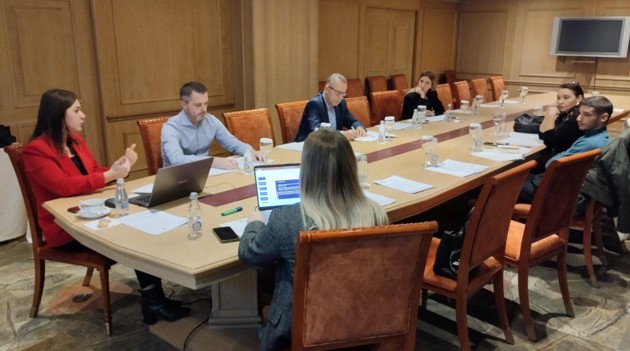
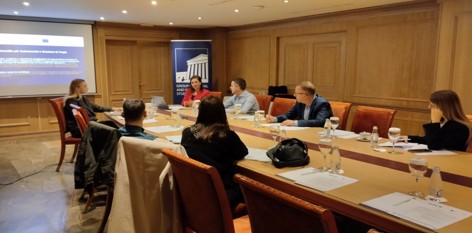
The Tenth meeting of the National Working Group (NWG) for Monitoring Public Administration Reform (PAR) in Kosovo took place on November 17, 2023, at the Swiss Diamond Hotel in Prishtina.
This event represented the initiation of the NWG for PAR session as part of the Western Balkan Enablers for Reforming Public Administrations – WeBER 3.0 project.
This session was attended by seven participants, including representatives from civil society organizations such as (INPO, PIPS, the Kosovar Center for Sustainable Development) and GLPS.
The main reason for this meeting was to present and discuss Draft Guidelines for citizen-centered local governance and PAR problem solving, a document that is part of the package grant recipients will implement within WeBER 3.0’s Small Grant Facility.
Introduction
The meeting was opened by Mrs. Blina Zhubi, Project Officer of the WeBER 3.0 project while Mrs. Renata Bajrami, Researcher of the WeBER 3.0 project provided a summary of the Draft Guidelines. With the attendance of new participants of NWG, Mrs. Blina Zhubi has made an overview of the WeBER 3.0 Project, followed by a concise summary of the instructions relating to the Call for Proposals.
Mrs Zhubi gave a brief introduction to the WeBER initiative, the WeBER 3.0 project, and its Small Grant Facility. She stated that Weber contributes directly to the strengthening of participatory democracy by enabling the effective participation of CSOs from the Western Balkans and supporting the comprehensive engagement of citizens in monitoring the results of RAP processes at all levels, in accordance with EU requirements.
Mrs Zhubi stated the criteria for grant selection, serving as a prompt for organizations regarding what applicants should possess. She also said that the SGF is different from the one implemented in the previous project, this time CFP has also guidelines to follow. Moreover, SGF has a lot of new steps to follow in order to implement their project. The WeBER 3.0’s SGF will support 20 projects in 6 Western Balkans countries, out of which 3 in Kosovo. Each grant is worth up to 14,000 EUR, and the deadline for applying is the 28th of December.
Mrs Zhubi has informed the participants about the criteria that in order to be eligible for a grant, the applicant should be the legal person, non-profit making, civil society organization that can demonstrate that its work is predominantly focused on a territory of one or several local self-government units, civil society organizations or grassroots working on one or more thematic areas of relevance to this CfP, registered in Kosovo at least 6 months before the announcement of CFP, be directly responsible for the preparation and management of the application, not acting as an intermediary and have appropriate organizational and financial capacity.
Mrs Zhubi has informed the participants about the thematic priorities of the CFP. She emphasized that the project application must identify a specific local governance or local administration problem that the project aims to solve and offer an initial description of the issue. Moreover, she informed the organizations about the necessary activities required for the project.
Presentation of Guidelines
Mrs Bajrami has presented the guidelines and she stressed that the guidelines aim to prioritize citizens’ needs, preferences, and desires in the decision-making and reform implementation process.
Mrs. Renata Bajrami presented the guidelines, emphasizing that they are designed for implementation by local-level CSOs, supported within the framework of the WeBER 3.0 Small Grant Facility, in order to empower citizens to play an active role in enhancing transparency and service delivery. She stated that these guidelines aim to strengthen the engagement of grassroots and other local CSOs in local Public Administration Reform and citizen engagement by promoting inclusive decision-making and problem-solving approaches.
Mrs. Bajrami stated that these guidelines cover initiatives that aim to boost the involvement of citizens in different areas of local governance, such as:
- Policy making through public consultations.
- Budget planning for community needs and transparency.
- Improving services based on citizen feedback.
- Engaging in local development planning aligned with community needs.
- Enhancing government communication and citizen engagement.
- Promoting inclusivity for diverse groups.
- Encouraging eco-friendly digital innovations.
Mrs. Bajrami emphasized that the guidelines are based on the design thinking approach package and the checklist for sustainable development goals (SDG). They offer a set of principles that form the basis for developing solutions to local problems.
Target audience
Mrs. Bajrami stressed that these guidelines primarily target citizens in order to address their needs, concerns and aspirations. She said that it is also crucial for local government officials to play a pivotal role in implementing citizen-centred solutions taking into account their inputs. Civil societies are valuable partners for mobilizing citizens, facilitating participatory processes and advocating citizens’ interests. Furthermore, local businesses should be seen as part of the target audience as well, especially if they’re involved in public-private partnerships.
Guidelines implementation process
Mrs. Renata Bajrami, Researcher of WeBER 3.0, stated that the integral part of the guidelines are the steps that should be followed.
Step 1: The focus is the further elaboration of a local problem or challenge. This includes research and data collection using the SDG checklist to understand the challenges facing communities.
Step 2: Mrs. Bajrami emphasized that the process involves engaging key stakeholders like citizens, local government representatives, CSOs, and experts. Through activities such as interviews, focus groups and community meetings, we gain insights into their perspectives and experiences, understanding their needs, concerns and aspirations for effective solutions.
Step 3: Based on the knowledge gained from stakeholder engagement, this step aims to precisely define the issue or challenge. The goal is to create a comprehensive problem statement that reflects the concerns of the community.
Step 4: Involves workshops and brainstorming sessions where stakeholders engage in creating different solutions without predetermined constraints. Prioritizing creative thinking, these sessions aim to develop innovative approaches that address core issues. Collaboration ensures that stakeholders have ownership of solutions, delivering efficient and comprehensive results.
Step 5: This step involves creating prototypes or scaled-down versions of proposed solutions to test their feasibility and effectiveness.
Step 6: This step involves analysing preliminary feedback to identify strengths, weaknesses and areas that need improvement in the prototypes. Solutions get refined through iteration based on this feedback, ensuring they fit the needs of the community.
Step 7: Involves engagement on advocacy efforts aimed to raise awareness of the issue and promote the solution, while ongoing communication with stakeholders shows project progress, success stories, and level of awareness.
Discussion and questions
After the presentation of the SGF and draft guidelines and the necessary steps, an open discussion commenced, entering the phase of collaborative dialogue.
GLPS has initiated discussions on their evaluations and findings regarding the progress of Public Administration Reform (PAR).
Mrs. Leonora Kryeziu from the Prishtina Institute for Political Studies (PIPS) has shared with us that have undertaken numerous initiatives, but faced a lack of responses from local authorities and civil society as well. They mentioned that there are many challenges in engaging citizens in such initiatives.
Mrs. Ebru Zborça from Initiative for Progress (INPO) informed us that they as an organization have created guidelines with the topic “Five successful steps for public consultations. They have created these guidelines in order that others to follow these successful steps for public consultations. Moreover, they highlighted several discussed issues, emphasizing the inadequate resources in many municipalities.
Additionally, they express their interest in operating within a single municipality, but preferably in smaller municipalities due to more active citizen involvement. The PIPS organization inquired about the possibility of submitting grant applications in the field of Waste Management.
Comment from INPO organization was to add this at the guidlines:
At the category: Expected Outcomes and Benefits, INPO suggested adding this paragraph.
‘Increasing awareness and understanding of Public Administration Reform by citizens through effective, understandable, and clear communication.
- Consolidation of communication messages and activities aiming to promote Public Administration Reform, aligning it with European standards and principles, resulting in educating citizens and other parties of interest.
- Ensuring continuous dialogue between local levels and citizens as well as civil society regarding progress and achievements.
- Encouraging open and transparent communication with citizens to guarantee equal rights and access for all.
Group for Legal and Political Studies (GLPS) held the 10th meeting of the National Working Group (NWG) for Monitoring Public Administration Reform (PAR) in Kosovo
Summary
The Tenth meeting of the National Working Group (NWG) for Monitoring Public Administration Reform (PAR) in Kosovo took place on November 17, 2023, at the Swiss Diamond Hotel in Prishtina.
This event represented the initiation of the NWG for PAR session as part of the Western Balkan Enablers for Reforming Public Administrations – WeBER 3.0 project.
This session was attended by seven participants, including representatives from civil society organizations such as (INPO, PIPS, the Kosovar Center for Sustainable Development) and GLPS.
The main reason for this meeting was to present and discuss Draft Guidelines for citizen-centered local governance and PAR problem solving, a document that is part of the package grant recipients will implement within WeBER 3.0’s Small Grant Facility.
Introduction
The meeting was opened by Mrs. Blina Zhubi, Project Officer of the WeBER 3.0 project while Mrs. Renata Bajrami, Researcher of the WeBER 3.0 project provided a summary of the Draft Guidelines. With the attendance of new participants of NWG, Mrs. Blina Zhubi has made an overview of the WeBER 3.0 Project, followed by a concise summary of the instructions relating to the Call for Proposals.
Mrs Zhubi gave a brief introduction to the WeBER initiative, the WeBER 3.0 project, and its Small Grant Facility. She stated that Weber contributes directly to the strengthening of participatory democracy by enabling the effective participation of CSOs from the Western Balkans and supporting the comprehensive engagement of citizens in monitoring the results of RAP processes at all levels, in accordance with EU requirements.
Mrs Zhubi stated the criteria for grant selection, serving as a prompt for organizations regarding what applicants should possess. She also said that the SGF is different from the one implemented in the previous project, this time CFP has also guidelines to follow. Moreover, SGF has a lot of new steps to follow in order to implement their project. The WeBER 3.0’s SGF will support 20 projects in 6 Western Balkans countries, out of which 3 in Kosovo. Each grant is worth up to 14,000 EUR, and the deadline for applying is the 28th of December.
Mrs Zhubi has informed the participants about the criteria that in order to be eligible for a grant, the applicant should be the legal person, non-profit making, civil society organization that can demonstrate that its work is predominantly focused on a territory of one or several local self-government units, civil society organizations or grassroots working on one or more thematic areas of relevance to this CfP, registered in Kosovo at least 6 months before the announcement of CFP, be directly responsible for the preparation and management of the application, not acting as an intermediary and have appropriate organizational and financial capacity.
Mrs Zhubi has informed the participants about the thematic priorities of the CFP. She emphasized that the project application must identify a specific local governance or local administration problem that the project aims to solve and offer an initial description of the issue. Moreover, she informed the organizations about the necessary activities required for the project.
Presentation of Guidelines
Mrs Bajrami has presented the guidelines and she stressed that the guidelines aim to prioritize citizens’ needs, preferences, and desires in the decision-making and reform implementation process.
Mrs. Renata Bajrami presented the guidelines, emphasizing that they are designed for implementation by local-level CSOs, supported within the framework of the WeBER 3.0 Small Grant Facility, in order to empower citizens to play an active role in enhancing transparency and service delivery. She stated that these guidelines aim to strengthen the engagement of grassroots and other local CSOs in local Public Administration Reform and citizen engagement by promoting inclusive decision-making and problem-solving approaches.
Mrs. Bajrami stated that these guidelines cover initiatives that aim to boost the involvement of citizens in different areas of local governance, such as:
- Policy making through public consultations.
- Budget planning for community needs and transparency.
- Improving services based on citizen feedback.
- Engaging in local development planning aligned with community needs.
- Enhancing government communication and citizen engagement.
- Promoting inclusivity for diverse groups.
- Encouraging eco-friendly digital innovations.
Mrs. Bajrami emphasized that the guidelines are based on the design thinking approach package and the checklist for sustainable development goals (SDG). They offer a set of principles that form the basis for developing solutions to local problems.
Target audience
Mrs. Bajrami stressed that these guidelines primarily target citizens in order to address their needs, concerns and aspirations. She said that it is also crucial for local government officials to play a pivotal role in implementing citizen-centred solutions taking into account their inputs. Civil societies are valuable partners for mobilizing citizens, facilitating participatory processes and advocating citizens’ interests. Furthermore, local businesses should be seen as part of the target audience as well, especially if they’re involved in public-private partnerships.
Guidelines implementation process
Mrs. Renata Bajrami, Researcher of WeBER 3.0, stated that the integral part of the guidelines are the steps that should be followed.
Step 1: The focus is the further elaboration of a local problem or challenge. This includes research and data collection using the SDG checklist to understand the challenges facing communities.
Step 2: Mrs. Bajrami emphasized that the process involves engaging key stakeholders like citizens, local government representatives, CSOs, and experts. Through activities such as interviews, focus groups and community meetings, we gain insights into their perspectives and experiences, understanding their needs, concerns and aspirations for effective solutions.
Step 3: Based on the knowledge gained from stakeholder engagement, this step aims to precisely define the issue or challenge. The goal is to create a comprehensive problem statement that reflects the concerns of the community.
Step 4: Involves workshops and brainstorming sessions where stakeholders engage in creating different solutions without predetermined constraints. Prioritizing creative thinking, these sessions aim to develop innovative approaches that address core issues. Collaboration ensures that stakeholders have ownership of solutions, delivering efficient and comprehensive results.
Step 5: This step involves creating prototypes or scaled-down versions of proposed solutions to test their feasibility and effectiveness.
Step 6: This step involves analysing preliminary feedback to identify strengths, weaknesses and areas that need improvement in the prototypes. Solutions get refined through iteration based on this feedback, ensuring they fit the needs of the community.
Step 7: Involves engagement on advocacy efforts aimed to raise awareness of the issue and promote the solution, while ongoing communication with stakeholders shows project progress, success stories, and level of awareness.
Discussion and questions
After the presentation of the SGF and draft guidelines and the necessary steps, an open discussion commenced, entering the phase of collaborative dialogue.
GLPS has initiated discussions on their evaluations and findings regarding the progress of Public Administration Reform (PAR).
Mrs. Leonora Kryeziu from the Prishtina Institute for Political Studies (PIPS) has shared with us that have undertaken numerous initiatives, but faced a lack of responses from local authorities and civil society as well. They mentioned that there are many challenges in engaging citizens in such initiatives.
Mrs. Ebru Zborça from Initiative for Progress (INPO) informed us that they as an organization have created guidelines with the topic “Five successful steps for public consultations. They have created these guidelines in order that others to follow these successful steps for public consultations. Moreover, they highlighted several discussed issues, emphasizing the inadequate resources in many municipalities.
Additionally, they express their interest in operating within a single municipality, but preferably in smaller municipalities due to more active citizen involvement. The PIPS organization inquired about the possibility of submitting grant applications in the field of Waste Management.
Comment from INPO organization was to add this at the guidlines:
At the category: Expected Outcomes and Benefits, INPO suggested adding this paragraph.
‘Increasing awareness and understanding of Public Administration Reform by citizens through effective, understandable, and clear communication.
- Consolidation of communication messages and activities aiming to promote Public Administration Reform, aligning it with European standards and principles, resulting in educating citizens and other parties of interest.
- Ensuring continuous dialogue between local levels and citizens as well as civil society regarding progress and achievements.
- Encouraging open and transparent communication with citizens to guarantee equal rights and access for all.