
European Policy Institute held Media Brunch
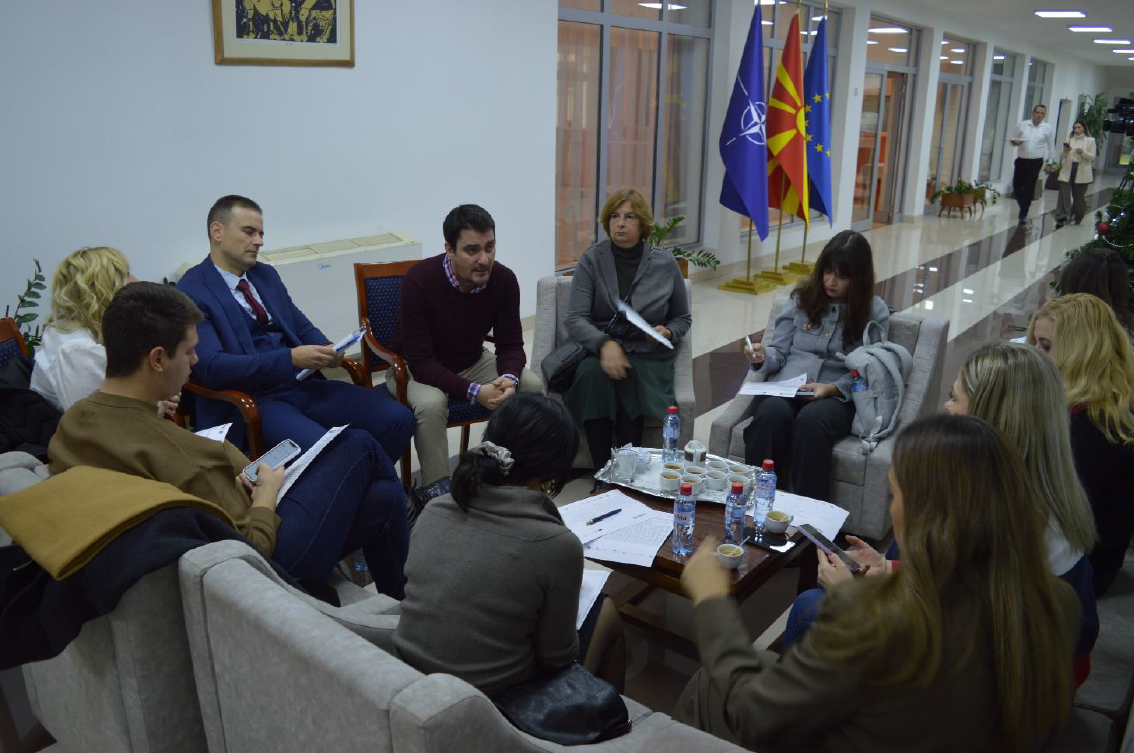
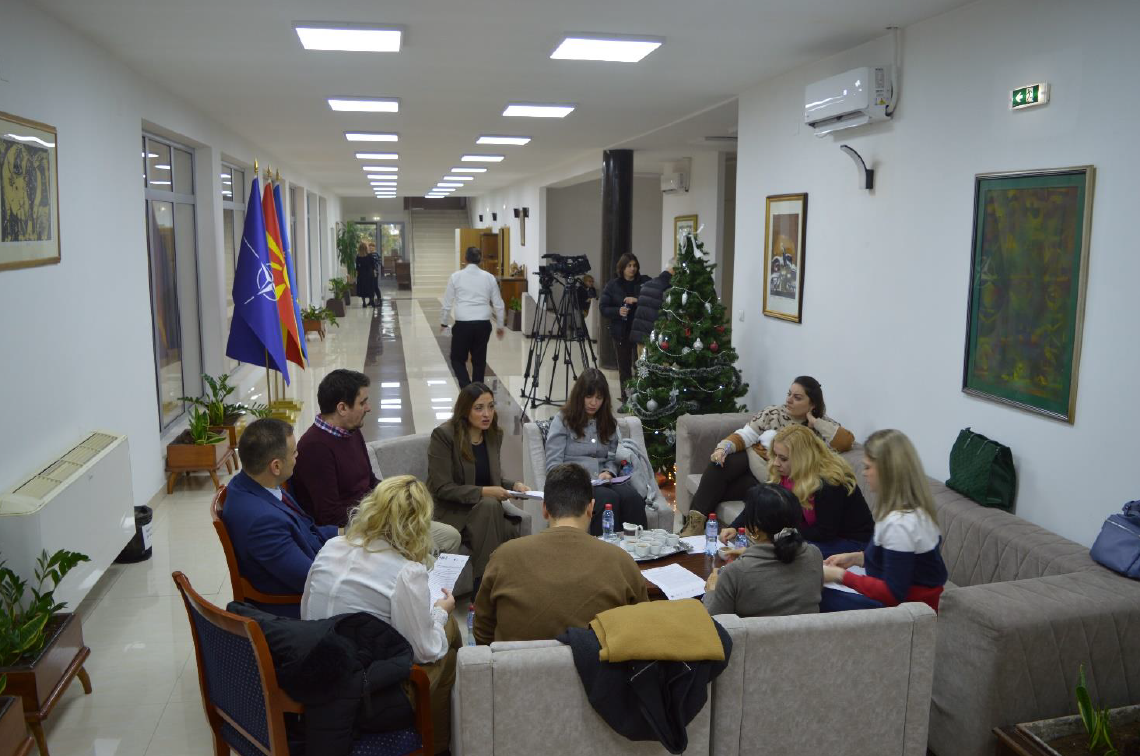
A morning media briefing was held to present a grant scheme aimed at strengthening the involvement of small, local civil society organisations in public administration reform (PAR) through evidence-based monitoring, advocacy, and constructive dialogue with institutions.
The meeting brought together representatives from Večer Press, Nezavisen, TV Kanal 5, TV Sitel, MIA, MRT, and Alfa TV, alongside EPI representatives Julijana Karai, Senior Researcher, and Vaska Ristovska, Project Officer, as well as representatives of the project’s grantee organisations: Rubin Nikoloski from Pro Local – Bitola, Aleksandar Jovanoski from Blink 21-41, and Tatjana Tasevska from the Consumers’ Organization of Macedonia. The discussion highlighted the achievements of three projects focused on improving public service delivery through digital tools in the municipalities of Kočani, Bitola, and Ohrid. In Kočani, the project “Understanding the Public Value of Technology – mCommunity”, implemented by Blink 42-21, strengthened digital communication between the municipality and citizens, attracting 1,300 new users and engaging 1,250 participants in digital consultations, while also providing training for municipal staff and establishing a local PAR forum.
In Bitola, the project “Bitola 2.0 – A Digital Municipality Closer to Citizens”, implemented by Pro Local – Bitola, engaged more than 300 citizens and stakeholders in improving local public services and established the city’s first Digital Cultural Calendar, bringing together cultural and sporting events.
In Ohrid, the Consumers’ Organization of Macedonia implemented the project “Together with Consumers in the Digitalization and Modernization of Public Utility Services”, which identified citizens’ needs through a survey of 200 respondents, developed guidelines for improving electronic services and an online complaint submission form, and conducted a digital awareness campaign reaching over 20,000 citizens. Together, these initiatives demonstrated how digitalisation, citizen participation, and cooperation between civil society and local institutions can contribute to more accessible, transparent, and efficient public services.
European Policy Institute held Media Brunch
A morning media briefing was held to present a grant scheme aimed at strengthening the involvement of small, local civil society organisations in public administration reform (PAR) through evidence-based monitoring, advocacy, and constructive dialogue with institutions.
The meeting brought together representatives from Večer Press, Nezavisen, TV Kanal 5, TV Sitel, MIA, MRT, and Alfa TV, alongside EPI representatives Julijana Karai, Senior Researcher, and Vaska Ristovska, Project Officer, as well as representatives of the project’s grantee organisations: Rubin Nikoloski from Pro Local – Bitola, Aleksandar Jovanoski from Blink 21-41, and Tatjana Tasevska from the Consumers’ Organization of Macedonia. The discussion highlighted the achievements of three projects focused on improving public service delivery through digital tools in the municipalities of Kočani, Bitola, and Ohrid. In Kočani, the project “Understanding the Public Value of Technology – mCommunity”, implemented by Blink 42-21, strengthened digital communication between the municipality and citizens, attracting 1,300 new users and engaging 1,250 participants in digital consultations, while also providing training for municipal staff and establishing a local PAR forum.
In Bitola, the project “Bitola 2.0 – A Digital Municipality Closer to Citizens”, implemented by Pro Local – Bitola, engaged more than 300 citizens and stakeholders in improving local public services and established the city’s first Digital Cultural Calendar, bringing together cultural and sporting events.
In Ohrid, the Consumers’ Organization of Macedonia implemented the project “Together with Consumers in the Digitalization and Modernization of Public Utility Services”, which identified citizens’ needs through a survey of 200 respondents, developed guidelines for improving electronic services and an online complaint submission form, and conducted a digital awareness campaign reaching over 20,000 citizens. Together, these initiatives demonstrated how digitalisation, citizen participation, and cooperation between civil society and local institutions can contribute to more accessible, transparent, and efficient public services.