
People
WeBER project is implemented by Think for Europe (TEN) members who come from 6 Western Balkans partner organisations. Find their position within the project and short bios below.

Milena Lazarević, Team Leader
 Milena is Programme Director of the European Policy Centre- CEP, in charge of the overall programmatic strategy of CEP as well as developing and managing the quality assurance system and processes within the organisation. In terms of thematic focus, she is primarily responsible for the Good Governance and Europe&us programme areas. Milena is a proven expert in the fields of public administration reform, regional development and local economic development, with consultancy engagements including SIGMA/OECD, ReSPA and the World Bank. In 2014-2015, in addition to her work at CEP, she acted as the special adviser to the Serbian Deputy Prime Minister in charge of public administration reform. Prior to co-founding CEP, Milena served for six years in the Serbian civil service, as adviser for public administration reform and administrative capacities for EU accession in the EU Integration Office of the Serbian Government (SEIO) and in the Serbian Ministry of Public Administration. As a Soros scholar, she obtained her BA degree in European Studies and International Relations at the American University in Bulgaria (AUBG), after which she obtained an advanced MA degree in European studies at the College of Europe, on a King Baudouin Foundation scholarship. She later also graduated from the Diplomatic Academy of the Ministry of Foreign Affairs of Serbia and obtained an MA in European Administrative Law at the Law Faculty of the Belgrade University. She speaks fluently English, French, Italian and Bulgarian and has basic knowledge of German. She is married and mother of two children.
Branko Birač, Project Manager
 Branko has almost 15 years of experience in the non-governmental sector, where he has been mostly involved in project implementation, planning, reporting, coordinating numerous teams, organizing various events, coordinating research, facilitating seminars and workshops, developing manuals and educational tools, developing projects and campaigns, etc. He has been working at CEP since 2020 as a Project Manager. His main focus was on the themes of violence prevention and especially on gender-based violence, on the promotion of gender equality, on gender issues and especially on masculinities, breaking stereotypes, combating discrimination and developing activism among youth, all in the role of the Programme manager at the Center E8. He has managed projects supported by CARE International, the Austrian Development Agency, the U.S. State Department (Global Women, Peace and Security Initiative), the U.S. Embassy, the Norwegian Embassy, the European Commission, OSCE, UNICEF, UNFPA, etc. He obtained the title of Master of Pedagogy at the Faculty of Philosophy, University of Belgrade. He interned for a year at the Center for Infant, Child and Youth Protection and shortly worked in elementary school. He is fluent in English, and his passionate hobby is photography.

Miloš Đinđić, Lead Researcher
 Miloš graduated from the Faculty of Political Sciences, University of Belgrade, where he continued his Master studies in political institutions and institutionalist theory. He studied European Union institutions and procedures as well as project cycle management as participant in the Leadership Development Programme, jointly organised by the College of Europe and the European Fund for the Balkans, as well as in the FutureLab Europe programme of the civil society organisations gathered around European Alliance for Democratic Citizenship. He completed several internships in domestic and foreign organisations, including the Belgrade Center for Security Policy, Political Academy of the Austrian People’s Party and National Democratic Institute and worked as an associate on the project administered by the European Fund for the Balkans. He is alumni member of the Belgrade Open School, XVI generation of students at the Department of Advanced Undergraduate Studies. He joined the CEP team in March 2012 as project assistant, then continung at the position of researcher. Speaks English and German.

Ena Marović
Communication Coordinator
Ena Marović, Communication Coordinator
Ena Marović is a seasoned Communications, Public Relations, and Social Media Manager. She holds a degree from the Faculty of Media and Communication at Singidunum University. Ena began her professional journey in a PR agency, where she honed her expertise in communication strategy, public relations services, and event management. Her career later expanded into social media marketing and graphic design with the Olympic Committee of Serbia.

Vaska Ristovska
Project Officer
Vaska Ristovska, Project Officer
 Vaska Ristovska has joined EPI in October 2014 as an administrative officer.Since then she has handled the financial and administrative management of several projects including: Institutional and core functioning grant for organisational operation of EPI, as well as development of the programme activities of the Institute; Financial and administrative support to the – (In)equality in social protection:multi-level analysis of intersectionality in social assistance provision – comparative study, Performance Audit and Policy Evaluation: On the Same or Parallel Tracks?, Equitable Ethnic Representation in the State Administration – USAID Civil Society Project, Urgent Reform Priorities Monitor, Combating barriers for exit: Macedonian Roma at the borders, Western Balkans Enabling Project for Civil Society Monitoring of Public Administration Reform and Fostering Sustainable Reintegration of Roma Returnees in Macedonia. Apart from the daily activities that ensure the smooth implementation of the projects, she also ensures the smooth management and the communication with project team and project partners. Vaska Ristovska has a University degree – Faculty of Ethnology, University “St. Cyril and Methodius” Macedonia.
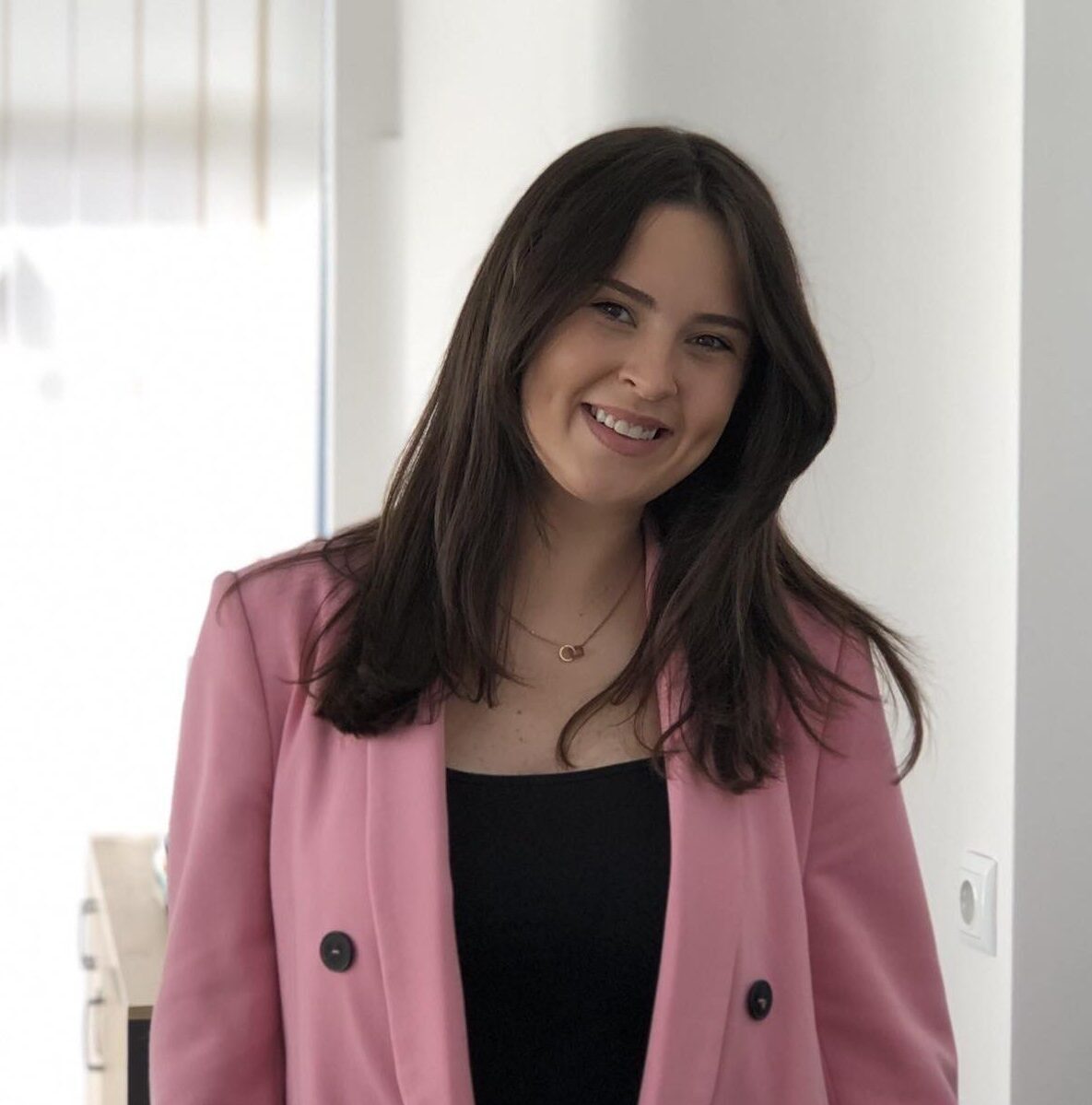
Blerina Istrefi
Project officer
Blerina Istrefi, Project officer

Blerina Istrefi is a Master-level lawyer from the University of Prishtina “Hasan Prishtina”, and currently, she is the Project Coordinator at GLPS. She completed her Master’s studies in July 2023 in the field of “Contracts and Commercial Law”, while she began working with civil society organizations since the end of my second year of bachelor studies. Initially, she was part of the Permanent Arbitration Tribunal at the Economic Chamber of Kosovo through the project “Commercial Justice” under USAID, and after gaining experience in the commercial field with the aim of advancing in other legal areas, she shared my experience as a monitor within the organization “The Humanitarian Law Center Kosovo (HLC Kosovo)” in the Courts of Kosovo and the Specialized Chambers of The Hague. Throughout these years, she has also been part of both local and international training in the legal field.

Blina Zhubi
Project Officer
Blina Zhubi, Project Coordinator

Ms. Blina Zhubi is a Project Coordinator at GLPS. In general, her work focuses on coordinating activities and initiatives run by the organization.
Blina has a Bachelor’s degree in Banking and Finance and Master’s in Management from AAB College. During her Bachelor’s degree studies, Blina had the opportunity to participate in a summer school at Ljubljana University. During her Master’ studies she won a scholarship to study for a semester at Lodz University in Poland, where she focused on management and marketing. Blina has a diverse professional background, having gained experience in the banking sector, as well as in communication and digital marketing with local and international organizations. Also, she has an academic background in human design. In 2019, Blina was recognized for her contribution in the field of economics and was awarded the “New Economist “award from Central Bank of Kosovo.

Aurora Halili
Project Officer
Aurora Halili, Project Officer

Aurora Halili is currently a Project Coordinator at the Institute for Democracy and Mediation (IDM) in Albania, engaged in projects that advance governance standards, transparency, public administration reform and EU Accession. She holds both a Bachelor’s and a Master’s degree in Business Administration from the University of Tirana. Her master’s research centered on behavioral segmentation in tourism, a field that aligns with her broader interest in sustainable development and the applications of data science in policy.
Prior to her role at IDM, Aurora coordinated projects within a civil society organization, where she worked on initiatives related to anti-corruption, good governance, rule of law, tourism and so on. Through this work, she contributed to research outputs, including policy briefs, survey reports, and technical studies, with a focus on empowering civic engagement and supporting policy reforms.
Aurora is fluent in Albanian (native) and English, has intermediate proficiency in Spanish, and is adept with data analysis and project management tools.
Iliada Korçari
Researcher
Iliada Korçari , Researcher
Iliada Korçari is a researcher and project officer at the Institute for Democracy and Mediation, in Tirana, Albania, where she focuses on governance and civil society. She is the country researcher for the WeBER 3.0 project “The Western Balkan Enablers for Reforming Public Administrations” and has been engaged in projects covering governance and civil society actors. She has taught seminars of Nationalism and Identity at the University of Tirana, Department of Political Sciences from 2015 – 2024. Iliada has worked in the public administration of Albania for several years and has been as a freelance researcher for different research projects.
She has a double-major in Political Sciences and Public Relations and Communication and has graduated in Political Theory MSc. and Russian and East European Studies MSc.
She is a proficient user of Albanian (native), English, Italian and Spanish and an independent user of French.

Bojana Pravilović
Project officer
Bojana Pravilović, Project officer

Bojana Pravilović graduated at the Faculty of Political Science, University of Belgrade, majoring in International Relations. She started working at the Institute Alternative through the Government Funded Internship Programme from January to October 2021. She is currently working as a Project Associate at the Institute Alternative in the area of public administration, public procurement and parliamentary program.
She is one of the authors of the monitoring report „Are parliamentary committees up to the task? Analysis of the performance of five parliamntary committees (October 1, 2021 – October 1, 2022). She was a research associate for following publications: „Direct procurement under magnifying glass“, „Overview of parliamentary oversight in Montenegro: From Talking to Working“, „Beneficial ownership“ of companies: How to get a better register in Montenegro“, “The Parliament passes the decision, but what is the procedure like?“, “Monitoring Report on the Freedom of Assembly in Montenegro (September 2020 – May 2021)“ and “Implementation of the New Public Procurement Law: A Chance to Leave the Vicious Circle“.
She speaks English and German.
Haris Ćutahija, Researcher

Haris Ćutahija graduated from the Faculty of Political Sciences at University of Sarajevo where he also gained MA degree in political science – European integration. He also holds professional qualification degree in political management from the New Bulgarian University. Has extensive experience in managing and working on various projects ranging from the European integration to youth activism and culture. He is columnist on several internet portals as well as a political analyst. He has joined the Foreign Policy Initiative BH team in March 2020 as a researcher.

Julijana Karai
Researcher
Julijana Karai, Researcher
 Julijana Karai is EPI’s Assembly Member. She holds a MA in Policy and Governance of the European Integration in South-Eastern Europe from the University of Bologna. She has been working in the Secretariat for European Affairs of the Government of the Republic of North Macedonia in the field of Political Criteria, specifically on issues related to democracy and rule of law, public administration reform, decentralisation and fight against corruption and in the Ministry of Information Society and Administration.
Julijana was a TEMPUS trainer for Continuing Education in European Affairs with the certificate from the College of Europe in Bruges, Belgium and junior researcher in the Regional IPA Project “Strengthening National Integrity Systems in the Western Balkans and Turkey and tracking developments of anti-corruption efforts”. She has been a project manager in the EU funded project “Civic Participation for Local Democracy”, under IPA Civil Society Facility and Media Programme 2014-2015 and a consultant in the UNDP Project “Developing innovative solutions for better access to local services”.

Dragana Jaćimović
Researcher
Dragana Jaćimović, Researcher

Dragana Jaćimović is a Public Policy Researcher at Institute Alternative, researching and monitoring in the areas of public administration reform and rule of law. She joined the IA team in January 2018. She is in charge of public policy analysis and project coordination. She is also member of the National Council for fight against corruption. Currently, Dragana holds the position of country researcher for Montenegro, while during the previous WeBER 2.0 project she covered position of project officer. Dragana holds a Bachelor and Specialist degree in Political Science, International relations. Speaks English and Turkish.

Stefan Radojčić
Project Assistant
Stefan Radojcic, Project Assistant

Stefan joined the CEP team in January 2022 as a project assistant. He obtained his Bachelor’s degree at the Department of Political Science at the Faculty of Political Science in Belgrade. He is currently pursuing a master’s degree in Democracy and democratization at the same faculty. During his studies, he attended numerous workshops, seminars and training courses, and participated in conducting two public opinion polls. He is an alumnus of CRTA, Libek, and IFDT. He is the co-author of a study on the provision of public services during a pandemic. His fields of interest include political theory, qualitative and quantitative research of democracy, macroeconomics and pop culture of the 2000s. He speaks English and is currently learning German.

Andrija Mladenovic
Andrija Mladenović
Andrija joined the CEP team in June 2020 and currently serves as the Executive Director. He holds a bachelor’s degree in international relations from the Faculty of Political Science at the University of Belgrade and pursued a master’s degree in political science at the Central European University in Budapest. Notably, he successfully defended his master’s thesis on cleavages among the Serbian intellectual elite and the phenomenon of Other Serbia, earning a Certificate of Specialization in Social and Political Theory. Presently, he is actively pursuing a Ph.D. degree focused on anticorruption. Andrija initiated his professional journey with the International Planned Parenthood Federation’s member association and subsequently gained valuable experience working with the UNDP in Serbia. Throughout his tenure at these organisations and CEP, he has amassed significant expertise in developing intricate project proposals, overseeing multi-level international project interventions, and leading small- to medium-sized teams. His diverse research interests encompass anticorruption, sustainable development and SDG16, and the future of the EU’s strategic autonomy.

Stevo Muk
 Stevo Muk graduated at the Law Faculty (University of Montenegro) in 1998. He completed postgraduate studies at the Faculty of Political Sciences. His previous work experiences entail Center for Development of Non-governmental organizations CRNVO (executive director 1999-2007), Open Society Foundation Montenegro (program officer for Civil society, Media and Roma (2001). He served as member of Balkan Trust for Democracy (BTD) Advisory Board. He was member of Ministry of Justice Advisory Council for Public administration reform (2003 -2006). He worked with Swedish Institute for Public Administration (SIPU) in regional TACSO project. Apart from work in the Institute Alternative, he has authored or co-authored„Nations in Transit“ – Report on Montenegro for 2010 and 2011, Freedom House, 2011; article on “Freedom of association, European and domestic legislation and praxis” in “Human Rights and Culture of Human Rights”, Centre for Civic Education, 2007; “Weak tradition, Uncertain future”- Civicus Civil Society Index for Montenegro, Centre for Development of NGOs, Podgorica, 2007; articles on “European Economic and Social Committee” and “Civil Society in Europe” in “Learn about EU”, Monitoring Centre – CEMI). He is one of the founders of Institute alternative, and has been the president of IA’s managing board since 2007.

Simonida Kacarska
Simonida Kacarska
Simonida is a Founder and Director of the European Policy Institute in Skopje, Macedonia. She holds a PhD in Politics and International Studies from the University of Leeds in the UK and has lived and studied in several European countries, including Bulgaria, Ireland, Croatia and Belgium. With her experience as a civil servant, researcher, consultant, lecturer and think tank manager, Simonida has insight in both conceptual approaches to societal transformation as well as the practical worlds of public policy. She has studied and is still puzzled by the role of external actors play in democratisation processes.

Sotiraq Hroni
 Sotiraq Hroni is Executive Director of the Institute for Democracy and Mediation (IDM), a Tirana-based independent think tank organization. A former diplomat and advisor to the PM and President of Albania, Mr. Hroni’s professional background and involvement with civil society over the past seventeen years has been focusing particularly on good governance, accountability and integrity development reforms, civic participation and evidence-based policy making.

Haris Ćutahija
Haris Ćutahija
Haris Ćutahija graduated from the Faculty of Political Sciences at University of Sarajevo where he also gained MA degree in political science – European integration. He also holds professional qualification degree in political management from the New Bulgarian University. Has extensive experience in managing and working on various projects ranging from the European integration to youth activism and culture. He is columnist on several internet portals as well as a political analyst. He has joined the Foreign Policy Initiative BH team in March 2020 as a researcher.

Arbëresha Loxha
arberesha_loxha

Arbëresha Loxha is a Senior Research Fellow at Group for Legal and Political Studies (GLPS), a policy think-tank based in Prishtina. Over the last five years, Arbëresha has designed and successfully lead research focusing on economic development and welfare policy. Her research includes amongst others, topics such as public administration reform, the business environment and investments, labour market, the pension system, migration, remittances and poverty. She has strong capacities to develop (quantitative) empirical analysis which she has incorporated in many of her publications. In addition to GLPS, she is a university lecturer of Management and Economics in AAB College and as a consultant in projects including those with EBRD and National Democratic Institute (NDI).
Arbëresha holds a PhD in Economics and an Msc in Economics for Business Analysis from Staffordshire University (SU) in the United Kingdom; both funded by a joint-scholarship from Open Society Foundation and SU. Currently she is the country researcher of WeBER regional project for Kosovo.

Gregor Virant
 Dr Gregor Virant is head of SIGMA (Support for Improvement in Governance and Management) is a joint initiative of the Organisation for Economic Co-operation and Development and the European Union. He worked as an international consultant and part-time professor of public administration and administrative law at the University of Ljubljana. He served as state secretary for public administration in Slovenia from 2000-2004 and was responsible for the preparation of Slovenian public administration for accession to the EU, including the reform of civil service. From 2004 to 2008 he served as minister for public administration and carried out several successful reforms in the areas of administrative burden reduction, improvement of administrative services quality and e-government. He led negotiations with public sector trade unions for a new salary system and successfully brought it to an end by signing collective agreements in 2008. Some of the projects that were developed under his leadership were internationally recognized (one-stop-shop project for starting up a business received a UNPS award, Slovenia ranked 2nd in the EU in the area of sophistication of online services in the EU sponsored Cap Gemini survey in 2007). From December 2011 to February 2013 he served as speaker of the national parliament, from 2013 to 2014 as minister of interior, responsible also for public administration. As an international consultant, he has been cooperating with several international organizations (WB, UNDP, EC, OECD, Council of Europe) and consultancy companies, mostly on projects in the Western Balkan and Ukraine. He was head of PAR team in the Delivery unit, a UNDP project supporting the Prime Minister of Serbia, and head of an EU high-level Advisory Group for PAR in Ukraine.

Jan-Hinrik Meyer-Sahling
 Jan-Hinrik Meyer-Sahling is Professor of Political Science at the University of Nottingham, School of Politics and International Relations. He holds a PhD and MSc from the London School of Economics and Political Science. Prof Meyer-Sahling has been the author of OECD-SIGMA Reports on civil service professionalisation in the new member states of Central and Eastern Europe and the candidate and potential applicant states from the Western Balkans. Currently, he is the Principal Investigator of a project on ‘civil service reform and anti-corruption’ that is funded by DFID and the British Academy. For details of Prof Meyer-Sahling’s CV, please visit www.meyer-sahling.eu.

Kalypso Nicolaidis
Kalypso Nicolaidis
Kalypso Nicolaidis, currently Chair in Global Affairs at the School of Transnational Governance (EUI), holds previous positions at the University of Oxford, Harvard University’s Kennedy School of Government, and Ecole Nationale d’Admiration, Paris. She has a history of collaboration with EU institutions and served as an advisor to various governments and international organizations.
At the EUI, she teaches courses on topics such as transnational politics, responsible negotiation, and EU-Africa relations. She is actively involved in multiple initiatives, including the EUI-wide Democracy cluster, the Transnational Democracy Initiative, and the Global Peace Tech Hub. Her research spans European integration, global affairs, democratic theory, international trade, post-colonialism, and more.
Her recent books include “A Citizen’s Guide to the Rule of Law” (with Adis Merdzanovic, 2021) and “Exodus, Reckoning, Sacrifice: Three Meanings of Brexit” (2019). For additional information on her projects and publications, visit her website: http://kalypsonicolaidis.com

Thomas Prorok
Thomas Prorok

Thomas Prorok is Deputy Managing Director of the Austrian based KDZ Centre for Public Administration Research. Since more than 15 years he is working in the field of Public Administration Reform, Decentralisation and Local Governments as well as EU-Integration. Thomas is Head of the “Austrian CAF-Center” which is the European system for quality management in the public sector. And he was programme-manager of LOGON – the Local Governments Network for EU-Integration.
He studied European Law and holds a master degree in political science from the University of Vienna and is editor of manifold publications on local governments, quality management and European Integration e.g. the “LOGON Report impact of European Union on Local Authorities”.

Tiina Randma-Liiv
 Tiina Randma-Liiv is Professor and Chair of Public Management and Policy at Tallinn University of Technology, Estonia, where she currently also serves as Vice Dean of the Faculty of Social Sciences and Member of the University Council. She holds a BA in Economics from the University of Tartu, Estonia, an MPA from New York University and a PhD from Loughborough University. Randma-Liiv previously served as Professor and Chair of Public Management at the University of Tartu, and as Visiting Professor at the Catholic University of Leuven, the University of Gdansk, Vienna University of Economics and Business Administration, and Florida International University. She has served on the Steering Committee of the European Group of Public Administration (EGPA), and of the Network of Institutes and Schools of Public Administration in Central and Eastern Europe (NISPAcee). Randma-Liiv currently serves in the Advisory Board to the Estonian Minister of Public Administration, previously she has been a member of the Academic Council of the President of Estonia and of the Prime Minister’s Advisory Board on Administrative Reform. She has served in the academic advisory board of the European Public Service Award, in the advisory board of the UNDP Regional Centre for Public Administration Reform, and in the OECD Expert Group of the Partnership for Democratic Governance. Randma-Liiv was a co-founder and a long-time Board member of the biggest Estonian think-tank – PRAXIS Centre for Policy Studies. Her research interests include the impact of fiscal crisis on public administration, public sector structure, civil service reforms, policy transfer and small states.
Maja Handjiska-Trendafilova

Ms. Handjiska Trendafilova is the Director of ReSPA – the regional intergovernmental organization supporting public administration reforms in Western Balkans (WB). Her professional career of two decades, drawing upon regional and international multilateral experience, has chiefly been dedicated to furthering the EU integration and regional cooperation processes in WB. Heading the Programme Department in RCC, she has earlier been coordinating the Regional Economic Area and Common Regional Market agendas, as endorsed by WB Prime Ministers. Steering intergovernmental regional platforms in numerous policy areas, she has significantly contributed to: deepening regional cooperation; substantial regional mutual learning, know-how, and best practice exchange; enhanced institutional capacities, legislative and policy reforms, as well as a number of regional multilateral legal instruments, agreements, and protocols.