Group for Legal and Political Studies (GLPS) organized the 13th meeting of the National Working Group (NWG) for Public Administration Reform (RAP)
Summary
On December 18th, the Group for Legal and Political Studies (GLPS) organized the 13th meeting of the National Working Group (NWG) for Public Administration Reform (RAP). The meeting was attended by 8 participants representatives from CSOs. However, even though they were invited to the meeting, the relevant monitored institutions, such as the Ministry of Infrastructure and the Ministry of Economy – Department of Energy, were not able to attend. The meeting officially started with an introduction from Renata Bajrami, Project Manager at GLPS. She explained the purpose of the meeting and emphasized the importance of monitoring efforts to ensure that reforms are effectively implemented.
Presentation of the Analysis: “Government Reorganization”
Ema Pula, Project Manager at GLPS, presented an analysis of government reorganization. She discussed the structural changes within the government, how they affect efficiency, and whether institutional frameworks follow good governance principles. The presentation was followed by a discussion where participants shared their perspectives and suggestions.
Good Governance Principles in Sectoral Policies: Findings and Discussion
The session continued with two presentations. The first was by Arbër Kadriu from INPO, representing the Ministry of Environment, Spatial Planning, and Infrastructure. He spoke about public finance management and public procurement. His presentation focused on transparency and efficiency in procurement processes and included findings from the monitoring process. Participants shared their thoughts on how to improve accountability in public financial management.
The second presentation was by Blerina Reqica from INDEP, representing the Ministry of Economy. She discussed service delivery and digitalization in the energy sector. She explained how digital solutions help improve accessibility and efficiency in public services and highlighted the importance of making these services more citizen-friendly.
Open Discussion and Conclusion
The final session of the meeting was an open discussion, where participants reflected on the key findings and recommendations from the day. Many shared their views on the best ways to improve public administration reforms in Kosovo.
The discussions highlighted that ongoing monitoring is necessary to measure the success of public administration reform. Government reorganization should be structured in a way that improves efficiency and follows governance principles. Public procurement processes should be more transparent, and digitalization should continue to play a role in making public services more accessible. The meeting reinforced the importance of cooperation between institutions and civil society in pushing forward meaningful reforms.
The event successfully facilitated dialogue among stakeholders and contributed to the ongoing efforts to improve public administration in Kosovo.
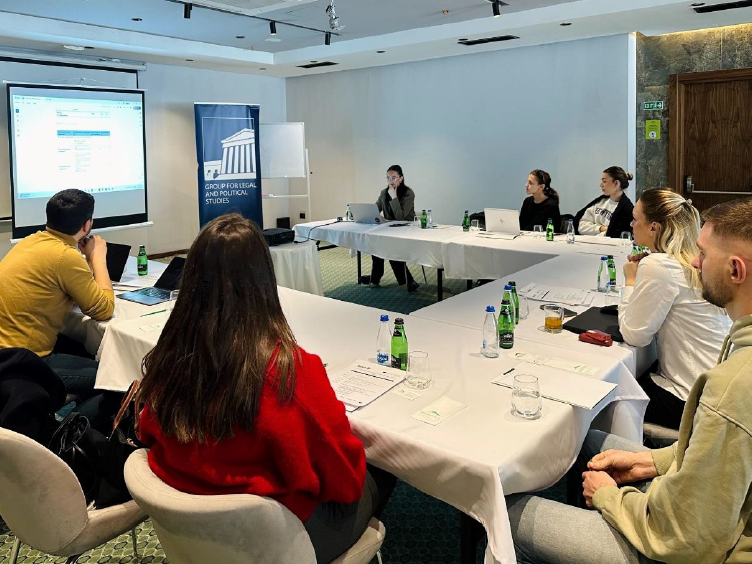
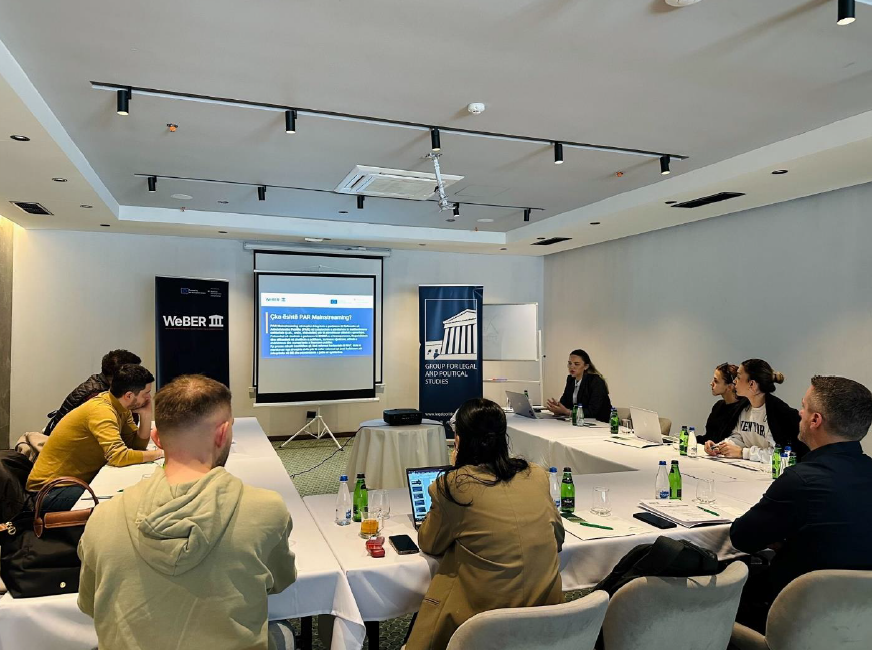
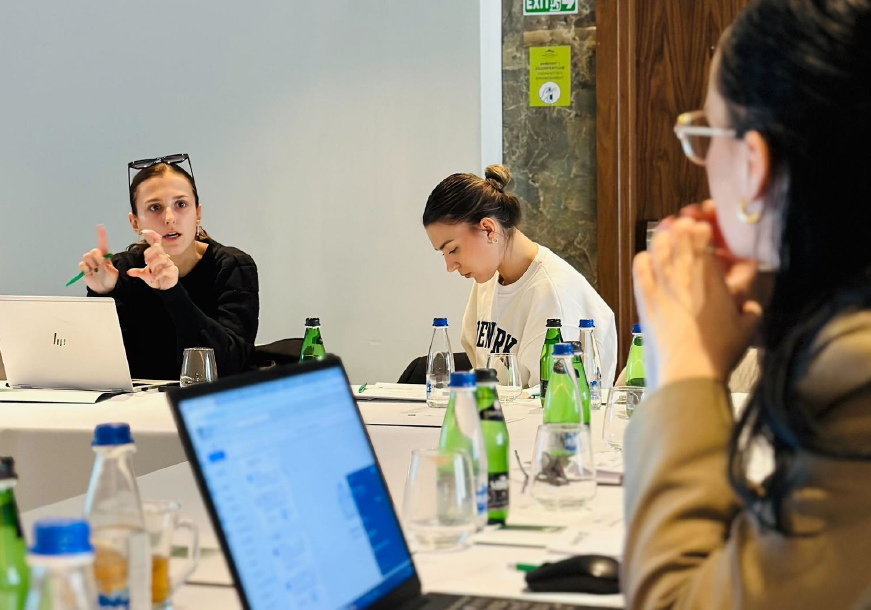
Group for Legal and Political Studies (GLPS) organized the 13th meeting of the National Working Group (NWG) for Public Administration Reform (RAP)
Summary
On December 18th, the Group for Legal and Political Studies (GLPS) organized the 13th meeting of the National Working Group (NWG) for Public Administration Reform (RAP). The meeting was attended by 8 participants representatives from CSOs. However, even though they were invited to the meeting, the relevant monitored institutions, such as the Ministry of Infrastructure and the Ministry of Economy – Department of Energy, were not able to attend. The meeting officially started with an introduction from Renata Bajrami, Project Manager at GLPS. She explained the purpose of the meeting and emphasized the importance of monitoring efforts to ensure that reforms are effectively implemented.
Presentation of the Analysis: “Government Reorganization”
Ema Pula, Project Manager at GLPS, presented an analysis of government reorganization. She discussed the structural changes within the government, how they affect efficiency, and whether institutional frameworks follow good governance principles. The presentation was followed by a discussion where participants shared their perspectives and suggestions.
Good Governance Principles in Sectoral Policies: Findings and Discussion
The session continued with two presentations. The first was by Arbër Kadriu from INPO, representing the Ministry of Environment, Spatial Planning, and Infrastructure. He spoke about public finance management and public procurement. His presentation focused on transparency and efficiency in procurement processes and included findings from the monitoring process. Participants shared their thoughts on how to improve accountability in public financial management.
The second presentation was by Blerina Reqica from INDEP, representing the Ministry of Economy. She discussed service delivery and digitalization in the energy sector. She explained how digital solutions help improve accessibility and efficiency in public services and highlighted the importance of making these services more citizen-friendly.
Open Discussion and Conclusion
The final session of the meeting was an open discussion, where participants reflected on the key findings and recommendations from the day. Many shared their views on the best ways to improve public administration reforms in Kosovo.
The discussions highlighted that ongoing monitoring is necessary to measure the success of public administration reform. Government reorganization should be structured in a way that improves efficiency and follows governance principles. Public procurement processes should be more transparent, and digitalization should continue to play a role in making public services more accessible. The meeting reinforced the importance of cooperation between institutions and civil society in pushing forward meaningful reforms.
The event successfully facilitated dialogue among stakeholders and contributed to the ongoing efforts to improve public administration in Kosovo.