Institute for Democracy and Mediation (IDM) organized the 10th meeting of the National Working Group (NWG) for Public Administration Reform (RAP)
Summary
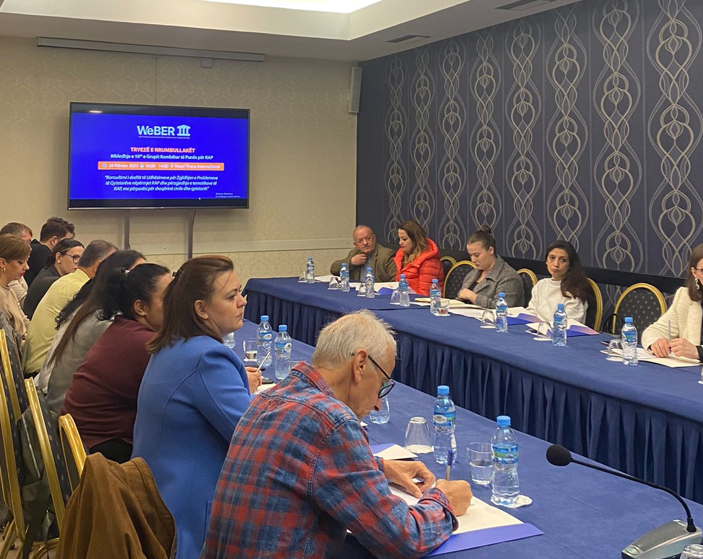
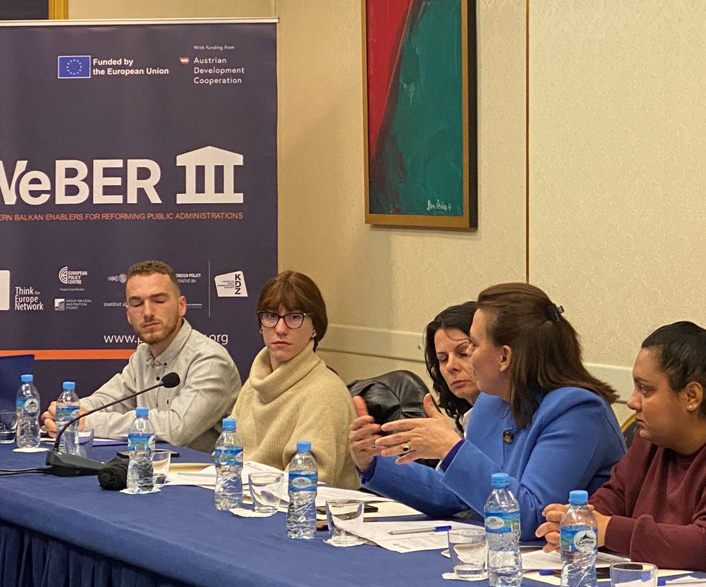
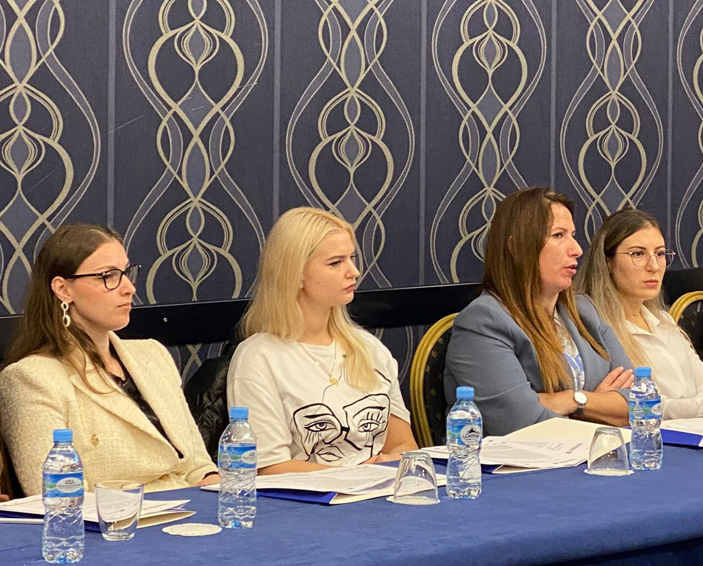
On November 24th , the Institute for Democracy and Mediation (IDM) organized the 10th meeting of the National Working Group (NWG) for Public Administration Reform (RAP).
212 CSOs, including National Working Group, were extended formal invitations via email.
The meeting was attended by 30 participants representatives from CSOs as well as the Department of Public Administration.
The topic was introducing the Small Grant Facility (SGF) and the eligibility of the applicants as well as the dissemination of draft of guidelines for citizen-centered local governance and the priority challenges within the Public Administration Reform (PAR).
The info session was held in Albanian language.
The program was envisaged as follows:
- 09:45 – 10:00: Registration
- 10:00 – 10:30: Welcome & Presentation: Draft Guidelines for Solving Citizens’ Problems through the Public Administration Reform
- 10:30 – 11:15: Open discussion among participants
- 11:15 – 11:35: Coffee break
- 11:35 – 12:30: Discussion on the primary issues of Public Administration Reform for citizens and the ranking of their priority according to the point of view of members of the National Working Group & Open discussion among participants
- 12:30 – 12:40: Conclusions and announcements for the Call for Proposals
Introduction
The Project Coordinator at IDM, Ms. Bora Kola extended a welcome for the participants explaining the WeBER 3.0’s goals and objectives and the Small Grant Facility (SGF).
The session transitioned into a presentation by the Researcher engaged at WeBER 3.0 Project, who explained the Draft Guidelines for Solving Citizens’ Problems through Public Administration Reform.
Throughout 10:30 – 11:15, the floor was then opened for an inclusive dialogue among participants. CSOs, each representing a distinct facet of society on the proposed guidelines.
The participants had the following questions:
- Is there a formal checklist that CSOs are obligated to adhere to strictly?
- Are CSOs required to complete and furnish a comprehensive explanation for each step of the design thinking process during the initial application phase? To what extent can they describe the problem they choose to solve in the project proposal, if that problem needs to come out of the discussions with citizens involved in the design thinking method, i.e. during the application of the project?
- What is the anticipated project follow-up, considering that CSOs aim to go beyond conducting a mere study, and wish to ensure that the government does not disregard the findings?
- Is a CSO deemed eligible when proposing a (national) legislative measure to address gaps in existing legislation?
- How many reporting periods are anticipated within the project framework?
The Department of Public Administration noted that they published the PAR Priority Measures 2023 – 2030 in the National consultation Registry and welcome any comments.
As for the above-mentioned question, below are the replies for each of the questions:
- Regarding the adherence to formal procedures, while there isn’t a mandated checklist for CSOs, KDZ and other WB partners will provide them and CSO are advised they generally adhere to them but modifications may occur depending on the nature of the proposed problem specifics and solutions.
- CSOs are generally expected to implement the design thinking method during the initial application phase throughout the proposal. However, they are not required to provide a detailed explanation for each step of design thinking. Steps may be merged depending on the nature of the proposed problem specifics and solutions.
- The follow-up of a project proposed and implemented by CSOs is crucial for ensuring the continuation of improvement. Although there is no 100 % guarantee that after the project ends the local government bodies will follow – up with measures we encourage that solution proposed take into consideration their limitations. Typically, CSOs should collaborate with relevant government bodies to discuss implementation strategies, policy changes, or other actions based on the study’s outcomes.
- CSOs) are eligible to propose legislative measures to address gaps in existing legislation as long as that legislation is within the jurisdiction and competence of the local government.
- The number of reporting periods within a project is in alignment with the project’s duration, Reporting periods are defined in the project plan. Projects with a duration of 6 months typically have two reporting periods (an interim report and final report) but longer projects are expected to have a higher frequency of reporting.
After the coffee break the discussion shifted on the primary issues of PAR.
The subsequent session, moderated by Mrs. Iliada Korçari, the researcher, delved into the primary issues of Public Administration Reform from the perspective of CSOs and citizens.
This phase witnessed an engaging discussion on the issues and themes of PAR that, according to the discerning perspective of CSOs actively engaged in the field and in direct contact with citizens, should be accorded priority. This discourse, rich with diverse viewpoints, aimed to distill the priorities that resonate at the grassroots level.
In the course of the discussions on public administration reform (PAR), the researcher proposed several pivotal (key) issues, inviting CSOs to contribute with additional topics during subsequent discussions.
The initially proposed key issues were categorized to encompass a broad spectrum of concerns including lack or insufficiency of institutional transparency, arbitrary policymaking, without input or consultation with interest groups, low participation of civil society in the monitoring and coordination bodies of rap etc.
Two videos from WeBER 2.0 were presented that explained the problems from a citizen perspective.
Afterwards, CSOs were encouraged to contribute with additional topics. As the discussion continued, they were actively engaged in the process, contributing valuable perspectives and expanding the scope of the issues, which are categorized as follows:
- Pension reform, as in existing legislation should be amended in the light of recent changes in the economical difficulties and to reflect a more balanced pension rate between citizen. For example, MPs have way higher pension than an ex employ of public administration.
- Enhancing Public Service Delivery Efficiency and Technological Infrastructure (E-Government), as in conducting a comprehensive evaluation of public service delivery efficiency, with a specific focus on the technological infrastructure supporting E-Government initiatives. This analysis should delve into the implementation of digital services, examining their accessibility and effectiveness for citizens. Notably, attention should be given to inclusivity considerations, recognizing that certain segments of the population may not have access to smartphones.
For instance, organizations like ADISA in Albania should explore avenues to cater to individuals without smartphone access. An example that highlights the difficulties from online service delivery was presented by a CSO, from a survey they had conducted in the city of Fier, Albania. Findings revealed that small conventional shops extended their services from e-Albania to citizens, albeit with additional fees.
- Improve citizen engagement and feedback mechanisms through public consultations, for example conducting an analysis of mechanisms in place for citizen engagement, feedback collection, and the incorporation of public opinions into decision-making processes.
Many CSOs shared the common concern that local government units (Municipalities) don’t have an official website and even if they do, they rarely post public consultation calls for local initiatives.
- Improve public officials recruitment process and capacity building, as in currently public servants are not recruited through a meritocratic process, there is a lack of public servants recruitment transparency and the assessment procedures of their capacity and skills compared to the job profile.
- Enhancing Transparency in Public-Private Partnerships (Procurement and PPP Procedures), where the key takeaway was strengthening transparency measures in the processes associated with Public-Private Partnerships (PPPs) and procurement.
All the issues discussed above were categorized into six categories in order for the CSO to vote on them: Human Resources Management, Budget Transparency, Access to Information, Public Consultation on Legislative Acts, Counter Services, Digital Services.
Through a voting mechanism facilitated by the Mentimeter app, CSOs responded to the question: “According to your experience, which issues/areas related to Public Administration Reform (RAP) require in-depth attention from civil society?”
This digital ballot results were:
- Human Resources Management: 8
- Budget Transparency: 3
- Access to Information: 3
- Public Consultation on Legislative Acts: 1
- Counter Services: 0
- Digital Services: 2
Afterwards, the midday lunch interval offered a platform for participants to engage in informal networking.
Institute for Democracy and Mediation (IDM) organized the 10th meeting of the National Working Group (NWG) for Public Administration Reform (RAP)
Summary
On November 24th , the Institute for Democracy and Mediation (IDM) organized the 10th meeting of the National Working Group (NWG) for Public Administration Reform (RAP).
212 CSOs, including National Working Group, were extended formal invitations via email.
The meeting was attended by 30 participants representatives from CSOs as well as the Department of Public Administration.
The topic was introducing the Small Grant Facility (SGF) and the eligibility of the applicants as well as the dissemination of draft of guidelines for citizen-centered local governance and the priority challenges within the Public Administration Reform (PAR).
The info session was held in Albanian language.
The program was envisaged as follows:
- 09:45 – 10:00: Registration
- 10:00 – 10:30: Welcome & Presentation: Draft Guidelines for Solving Citizens’ Problems through the Public Administration Reform
- 10:30 – 11:15: Open discussion among participants
- 11:15 – 11:35: Coffee break
- 11:35 – 12:30: Discussion on the primary issues of Public Administration Reform for citizens and the ranking of their priority according to the point of view of members of the National Working Group & Open discussion among participants
- 12:30 – 12:40: Conclusions and announcements for the Call for Proposals
Introduction
The Project Coordinator at IDM, Ms. Bora Kola extended a welcome for the participants explaining the WeBER 3.0’s goals and objectives and the Small Grant Facility (SGF).
The session transitioned into a presentation by the Researcher engaged at WeBER 3.0 Project, who explained the Draft Guidelines for Solving Citizens’ Problems through Public Administration Reform.
Throughout 10:30 – 11:15, the floor was then opened for an inclusive dialogue among participants. CSOs, each representing a distinct facet of society on the proposed guidelines.
The participants had the following questions:
- Is there a formal checklist that CSOs are obligated to adhere to strictly?
- Are CSOs required to complete and furnish a comprehensive explanation for each step of the design thinking process during the initial application phase? To what extent can they describe the problem they choose to solve in the project proposal, if that problem needs to come out of the discussions with citizens involved in the design thinking method, i.e. during the application of the project?
- What is the anticipated project follow-up, considering that CSOs aim to go beyond conducting a mere study, and wish to ensure that the government does not disregard the findings?
- Is a CSO deemed eligible when proposing a (national) legislative measure to address gaps in existing legislation?
- How many reporting periods are anticipated within the project framework?
The Department of Public Administration noted that they published the PAR Priority Measures 2023 – 2030 in the National consultation Registry and welcome any comments.
As for the above-mentioned question, below are the replies for each of the questions:
- Regarding the adherence to formal procedures, while there isn’t a mandated checklist for CSOs, KDZ and other WB partners will provide them and CSO are advised they generally adhere to them but modifications may occur depending on the nature of the proposed problem specifics and solutions.
- CSOs are generally expected to implement the design thinking method during the initial application phase throughout the proposal. However, they are not required to provide a detailed explanation for each step of design thinking. Steps may be merged depending on the nature of the proposed problem specifics and solutions.
- The follow-up of a project proposed and implemented by CSOs is crucial for ensuring the continuation of improvement. Although there is no 100 % guarantee that after the project ends the local government bodies will follow – up with measures we encourage that solution proposed take into consideration their limitations. Typically, CSOs should collaborate with relevant government bodies to discuss implementation strategies, policy changes, or other actions based on the study’s outcomes.
- CSOs) are eligible to propose legislative measures to address gaps in existing legislation as long as that legislation is within the jurisdiction and competence of the local government.
- The number of reporting periods within a project is in alignment with the project’s duration, Reporting periods are defined in the project plan. Projects with a duration of 6 months typically have two reporting periods (an interim report and final report) but longer projects are expected to have a higher frequency of reporting.
After the coffee break the discussion shifted on the primary issues of PAR.
The subsequent session, moderated by Mrs. Iliada Korçari, the researcher, delved into the primary issues of Public Administration Reform from the perspective of CSOs and citizens.
This phase witnessed an engaging discussion on the issues and themes of PAR that, according to the discerning perspective of CSOs actively engaged in the field and in direct contact with citizens, should be accorded priority. This discourse, rich with diverse viewpoints, aimed to distill the priorities that resonate at the grassroots level.
In the course of the discussions on public administration reform (PAR), the researcher proposed several pivotal (key) issues, inviting CSOs to contribute with additional topics during subsequent discussions.
The initially proposed key issues were categorized to encompass a broad spectrum of concerns including lack or insufficiency of institutional transparency, arbitrary policymaking, without input or consultation with interest groups, low participation of civil society in the monitoring and coordination bodies of rap etc.
Two videos from WeBER 2.0 were presented that explained the problems from a citizen perspective.
Afterwards, CSOs were encouraged to contribute with additional topics. As the discussion continued, they were actively engaged in the process, contributing valuable perspectives and expanding the scope of the issues, which are categorized as follows:
- Pension reform, as in existing legislation should be amended in the light of recent changes in the economical difficulties and to reflect a more balanced pension rate between citizen. For example, MPs have way higher pension than an ex employ of public administration.
- Enhancing Public Service Delivery Efficiency and Technological Infrastructure (E-Government), as in conducting a comprehensive evaluation of public service delivery efficiency, with a specific focus on the technological infrastructure supporting E-Government initiatives. This analysis should delve into the implementation of digital services, examining their accessibility and effectiveness for citizens. Notably, attention should be given to inclusivity considerations, recognizing that certain segments of the population may not have access to smartphones.
For instance, organizations like ADISA in Albania should explore avenues to cater to individuals without smartphone access. An example that highlights the difficulties from online service delivery was presented by a CSO, from a survey they had conducted in the city of Fier, Albania. Findings revealed that small conventional shops extended their services from e-Albania to citizens, albeit with additional fees.
- Improve citizen engagement and feedback mechanisms through public consultations, for example conducting an analysis of mechanisms in place for citizen engagement, feedback collection, and the incorporation of public opinions into decision-making processes.
Many CSOs shared the common concern that local government units (Municipalities) don’t have an official website and even if they do, they rarely post public consultation calls for local initiatives.
- Improve public officials recruitment process and capacity building, as in currently public servants are not recruited through a meritocratic process, there is a lack of public servants recruitment transparency and the assessment procedures of their capacity and skills compared to the job profile.
- Enhancing Transparency in Public-Private Partnerships (Procurement and PPP Procedures), where the key takeaway was strengthening transparency measures in the processes associated with Public-Private Partnerships (PPPs) and procurement.
All the issues discussed above were categorized into six categories in order for the CSO to vote on them: Human Resources Management, Budget Transparency, Access to Information, Public Consultation on Legislative Acts, Counter Services, Digital Services.
Through a voting mechanism facilitated by the Mentimeter app, CSOs responded to the question: “According to your experience, which issues/areas related to Public Administration Reform (RAP) require in-depth attention from civil society?”
This digital ballot results were:
- Human Resources Management: 8
- Budget Transparency: 3
- Access to Information: 3
- Public Consultation on Legislative Acts: 1
- Counter Services: 0
- Digital Services: 2
Afterwards, the midday lunch interval offered a platform for participants to engage in informal networking.