
National Conference “Citizens First” Held in Podgorica
Podgorica, 30 October 2025
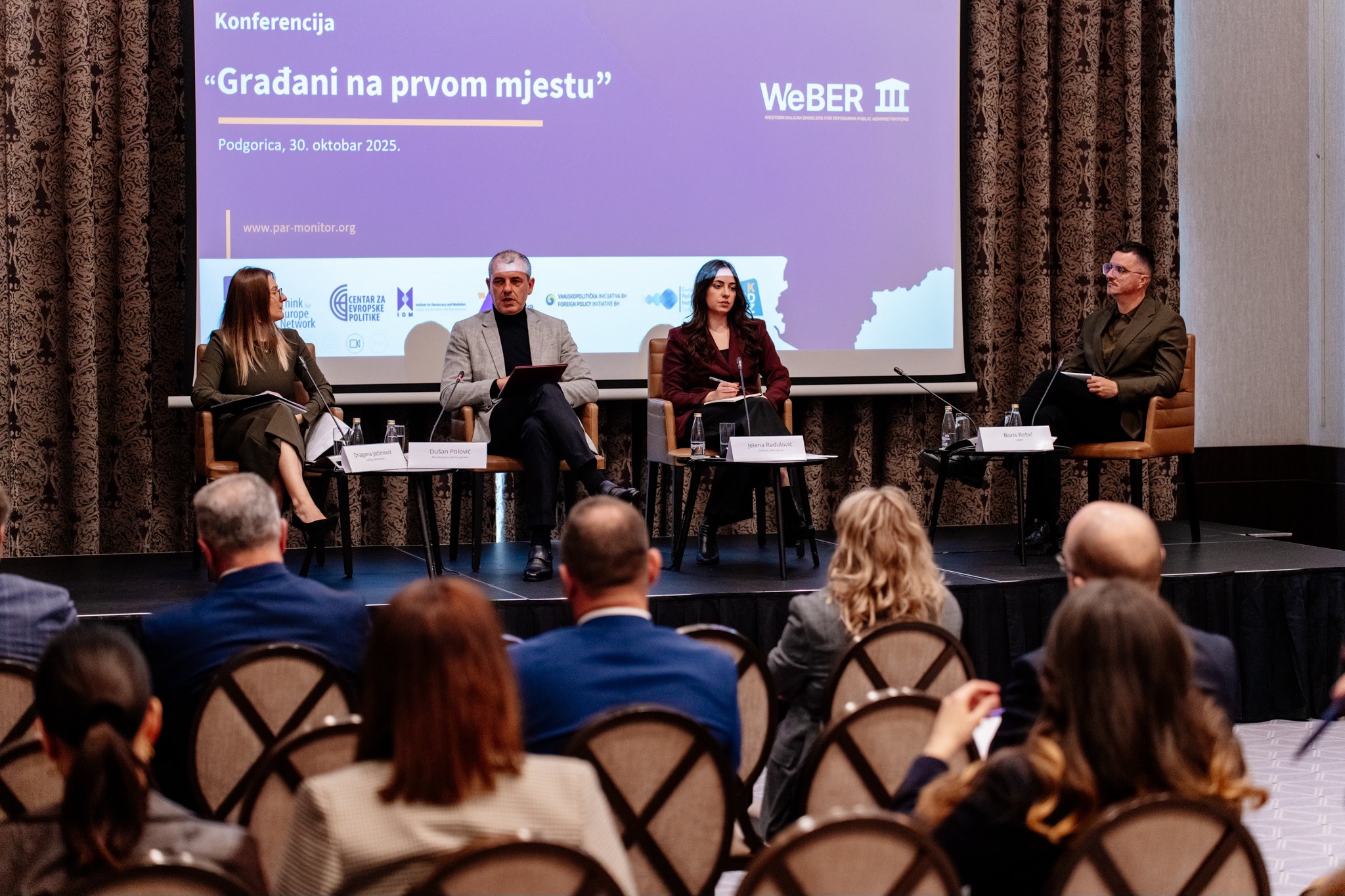
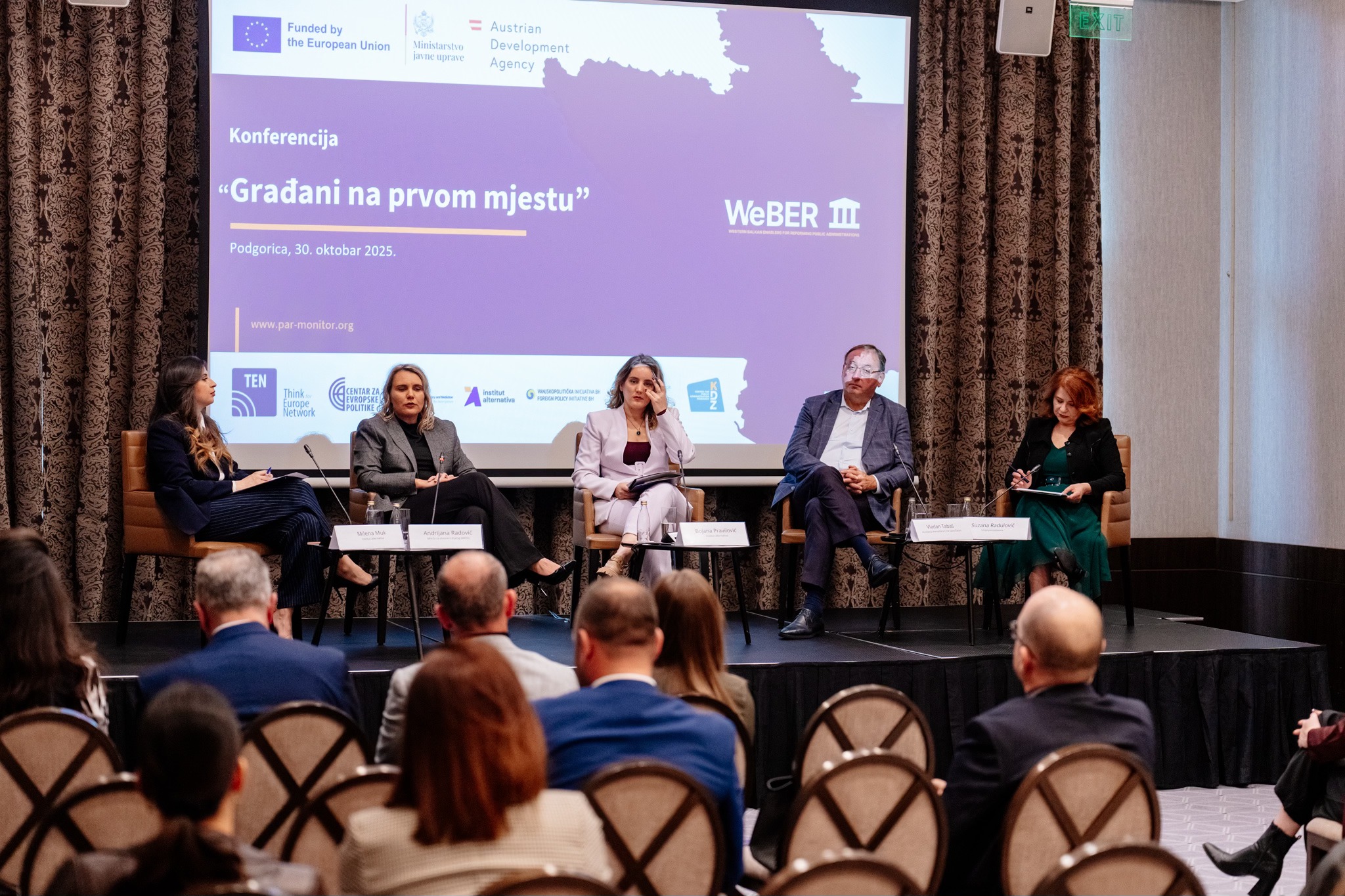
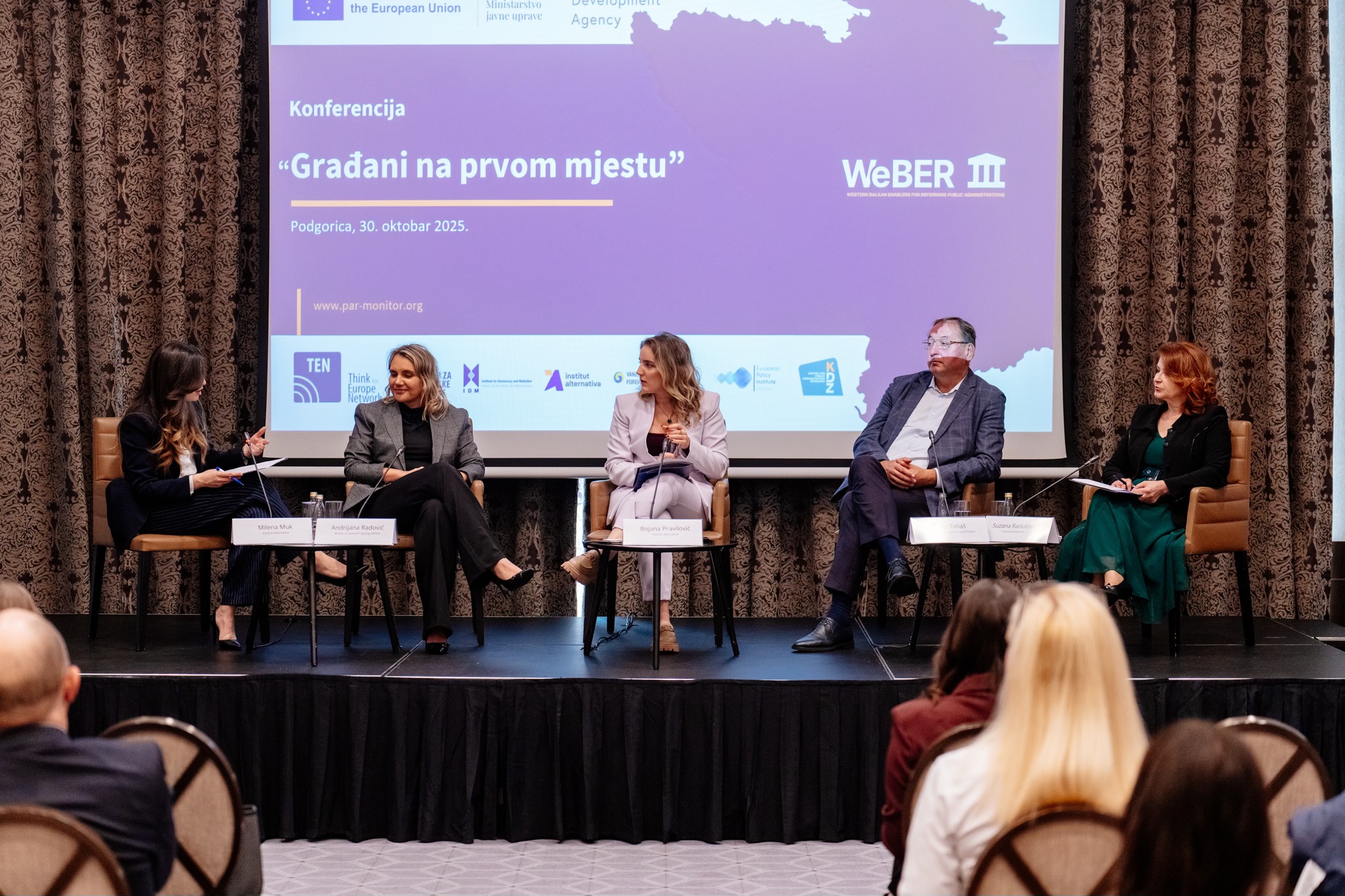
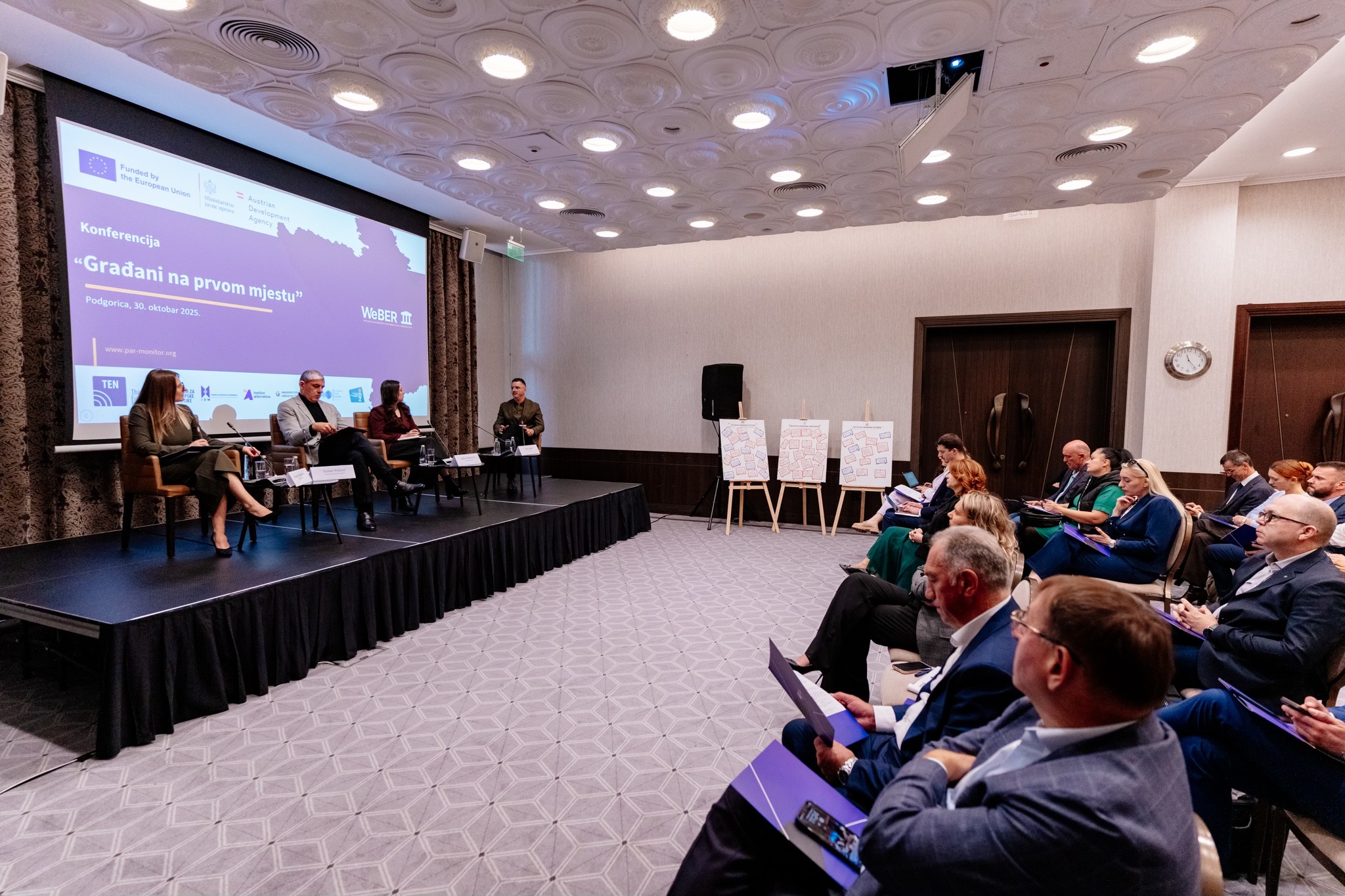
The National Conference “Citizens First”, organised in Podgorica, brought together representatives of public institutions, civil society organisations, experts and the business community to discuss the state of digitalisation and citizen-oriented public services in Montenegro.
Held within the framework of the WeBER 3.0 project, the conference focused on progress, challenges and future priorities in public administration reform, with particular attention to digital services, interoperability and citizen participation.
Digitalisation: Progress Without Impact?
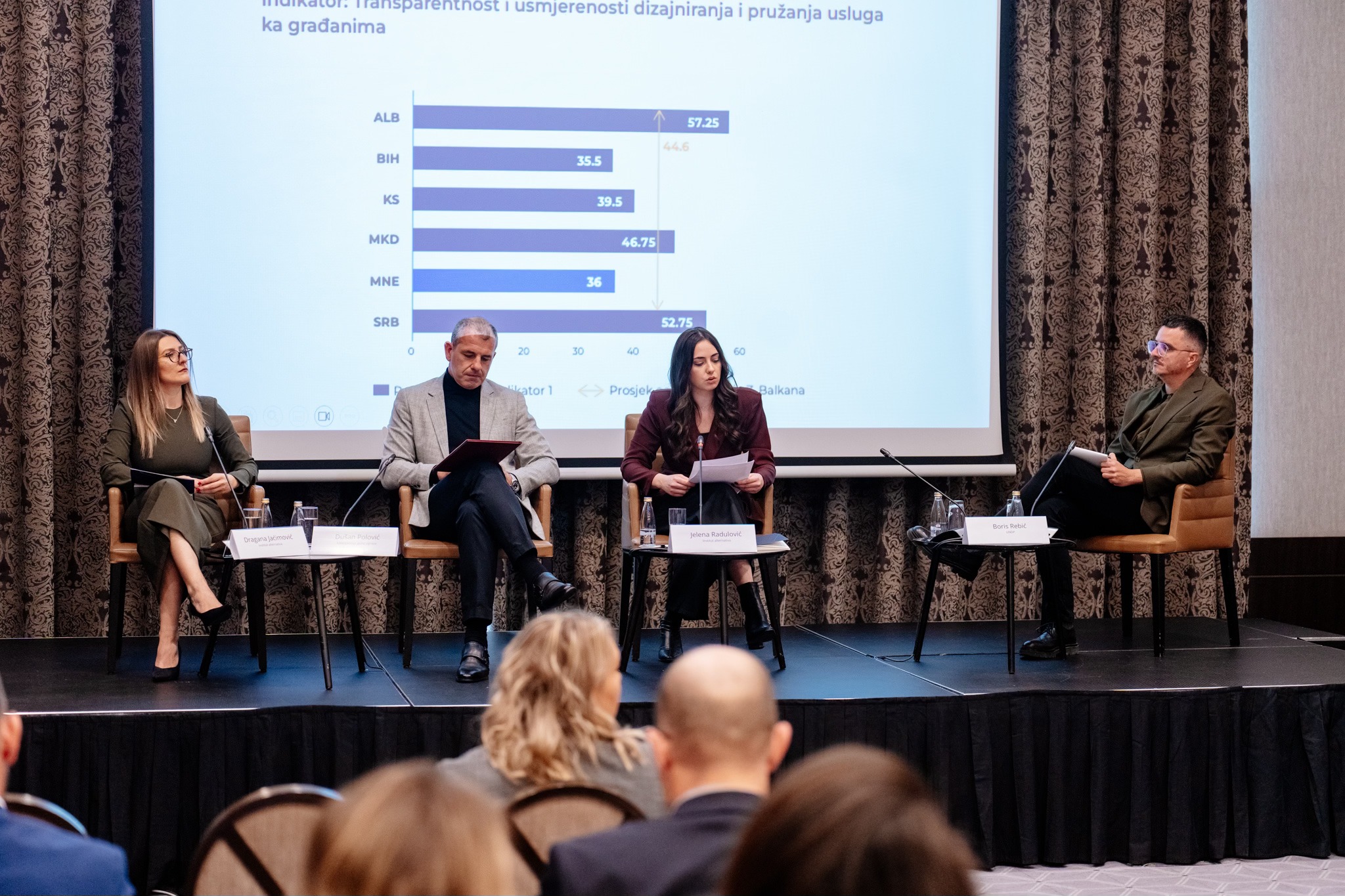
The conference opened with the presentation of key findings from WeBER monitoring, which indicate that Montenegro ranks near the bottom in the region in terms of citizen-oriented public service delivery. While a formal legislative framework for digitalisation exists and the national e-government portal has been launched, its impact on service delivery remains limited.
Participants highlighted that none of the key administrative services analysed within WeBER monitoring are fully available through the e-government portal, while information on services is often fragmented, incomplete or available only in written form. At the same time, only a minority of citizens believe they can influence the development of public services, pointing to the need for stronger citizen engagement.
Institutional Perspectives on Digital Transformation
Representatives of institutions emphasised that Montenegro is currently in a phase of developing digital services, with strategic priorities focusing on cybersecurity, e-services and digital identity. Interoperability and digital identification were highlighted as essential foundations for effective digital service delivery.
At the same time, speakers noted persistent challenges, including limited institutional cooperation, insufficient use of existing interoperability mechanisms and obstacles related to the activation and use of electronic identity cards. The lack of promotion and user support for digital services was also identified as a key factor limiting their uptake among citizens.
Citizens’ Experiences with Public Services
The conference also presented findings from exit polls conducted in several municipalities, which revealed recurring challenges faced by citizens when using public services. These include complex procedures, long processing times, limited online service availability and difficulties in accessing digital services, particularly for vulnerable groups.
At the same time, participants noted positive examples of digital services, particularly in the fields of healthcare and education, which demonstrate the potential of digitalisation when services are designed around citizens’ needs.
Local-Level Participation and Civil Society Contributions
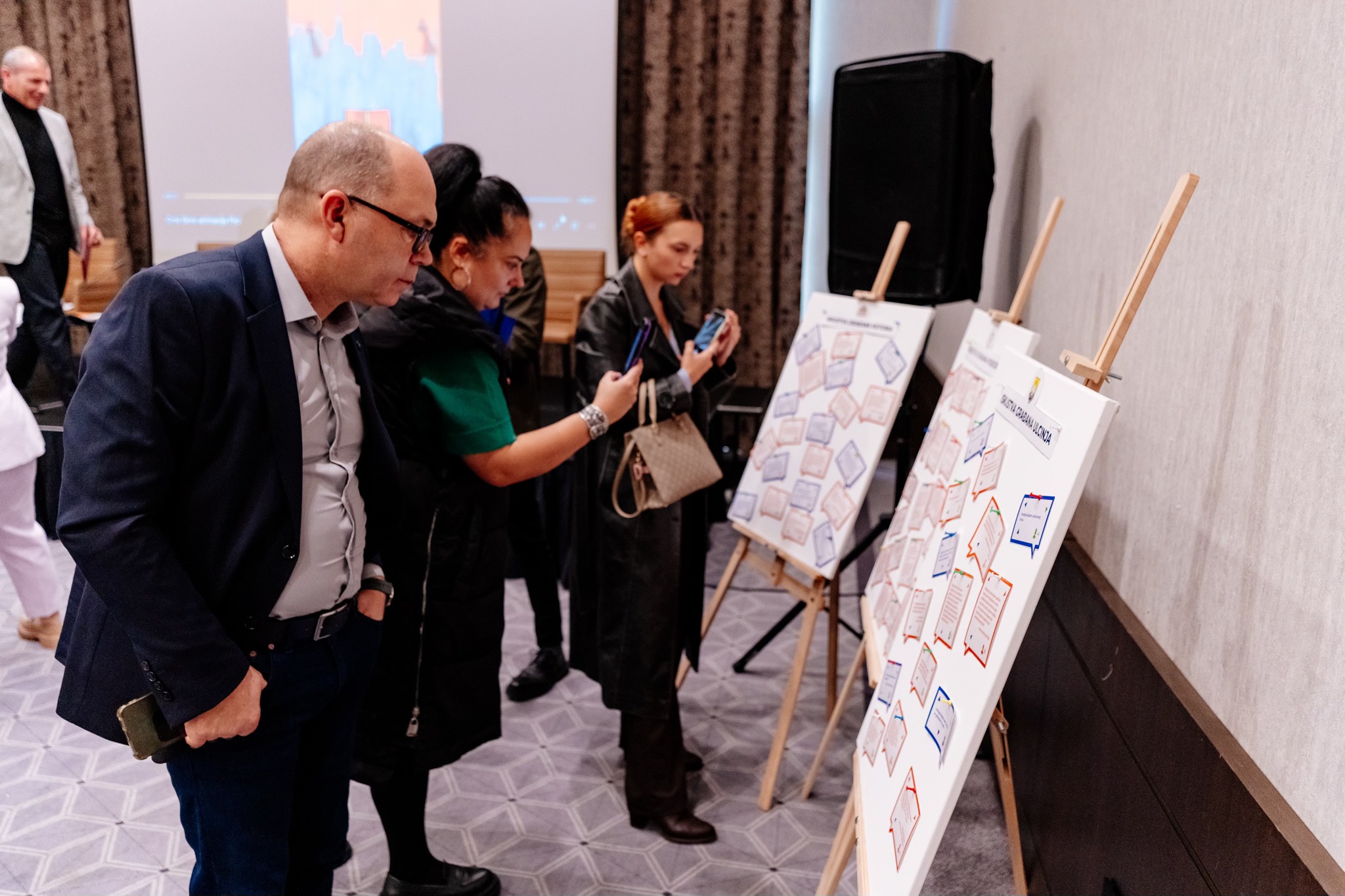
The second part of the conference focused on participatory approaches and local-level experiences from WeBER-supported initiatives. Civil society organisations presented projects aimed at strengthening citizen participation in consultations, improving access to information and simplifying administrative procedures.
Speakers emphasised that meaningful participation requires timely and accessible consultation processes, as well as digital tools that enable citizens to express their needs and priorities at the local level. Experiences from WeBER-supported projects showed that citizen input can provide concrete guidance for improving public services and policy design.
Key Messages
Discussions at the conference highlighted that digitalisation alone does not automatically lead to better services. Participants agreed that Montenegro needs to accelerate the development of functional e-services, strengthen interoperability between institutions and simplify legal and administrative procedures.
A stronger focus on citizen experience, improved communication about available services and greater involvement of citizens in service design were identified as essential steps toward building a more efficient, transparent and citizen-oriented public administration.


National Conference “Citizens First” Held in Podgorica
Podgorica, 30 October 2025
The National Conference “Citizens First”, organised in Podgorica, brought together representatives of public institutions, civil society organisations, experts and the business community to discuss the state of digitalisation and citizen-oriented public services in Montenegro.
Held within the framework of the WeBER 3.0 project, the conference focused on progress, challenges and future priorities in public administration reform, with particular attention to digital services, interoperability and citizen participation.
Digitalisation: Progress Without Impact?
The conference opened with the presentation of key findings from WeBER monitoring, which indicate that Montenegro ranks near the bottom in the region in terms of citizen-oriented public service delivery. While a formal legislative framework for digitalisation exists and the national e-government portal has been launched, its impact on service delivery remains limited.
Participants highlighted that none of the key administrative services analysed within WeBER monitoring are fully available through the e-government portal, while information on services is often fragmented, incomplete or available only in written form. At the same time, only a minority of citizens believe they can influence the development of public services, pointing to the need for stronger citizen engagement.
Institutional Perspectives on Digital Transformation
Representatives of institutions emphasised that Montenegro is currently in a phase of developing digital services, with strategic priorities focusing on cybersecurity, e-services and digital identity. Interoperability and digital identification were highlighted as essential foundations for effective digital service delivery.
At the same time, speakers noted persistent challenges, including limited institutional cooperation, insufficient use of existing interoperability mechanisms and obstacles related to the activation and use of electronic identity cards. The lack of promotion and user support for digital services was also identified as a key factor limiting their uptake among citizens.
Citizens’ Experiences with Public Services
The conference also presented findings from exit polls conducted in several municipalities, which revealed recurring challenges faced by citizens when using public services. These include complex procedures, long processing times, limited online service availability and difficulties in accessing digital services, particularly for vulnerable groups.
At the same time, participants noted positive examples of digital services, particularly in the fields of healthcare and education, which demonstrate the potential of digitalisation when services are designed around citizens’ needs.
Local-Level Participation and Civil Society Contributions
The second part of the conference focused on participatory approaches and local-level experiences from WeBER-supported initiatives. Civil society organisations presented projects aimed at strengthening citizen participation in consultations, improving access to information and simplifying administrative procedures.
Speakers emphasised that meaningful participation requires timely and accessible consultation processes, as well as digital tools that enable citizens to express their needs and priorities at the local level. Experiences from WeBER-supported projects showed that citizen input can provide concrete guidance for improving public services and policy design.
Key Messages
Discussions at the conference highlighted that digitalisation alone does not automatically lead to better services. Participants agreed that Montenegro needs to accelerate the development of functional e-services, strengthen interoperability between institutions and simplify legal and administrative procedures.
A stronger focus on citizen experience, improved communication about available services and greater involvement of citizens in service design were identified as essential steps toward building a more efficient, transparent and citizen-oriented public administration.