
National Conference “Citizens First” Held in Pristina
Pristina, 3 December 2025
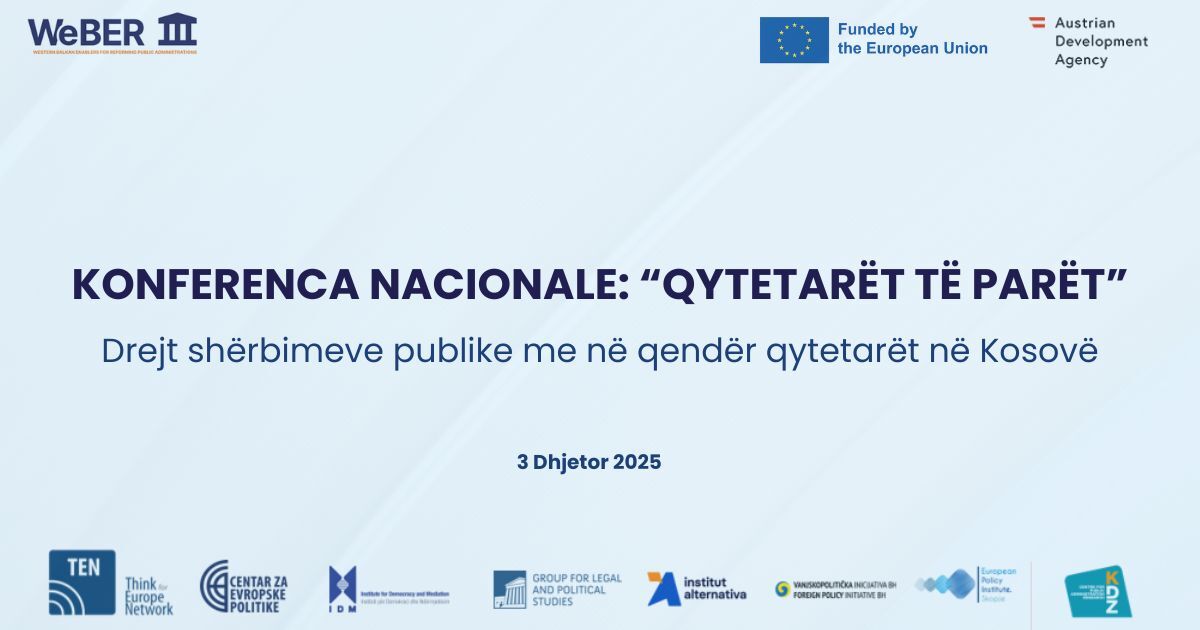
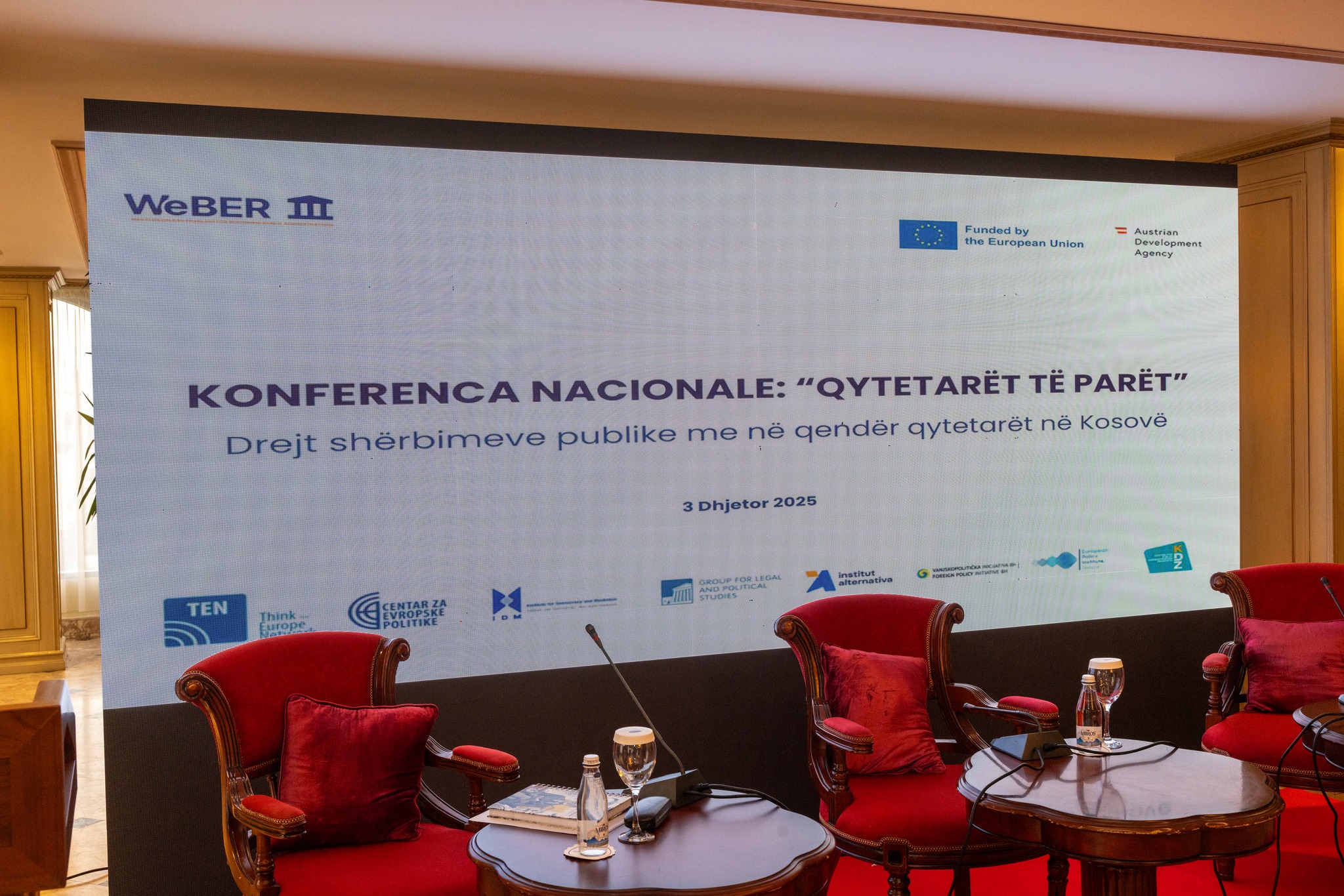
The National Conference “Towards Citizen-Oriented Public Services in Kosovo”, organised by the Group for Legal and Political Studies (GLPS), brought together representatives of public institutions, experts and civil society organisations to discuss progress, challenges and future steps in improving public service delivery in Kosovo.
The conference was organised within the framework of the WeBER 3.0 project, and focused on strengthening transparency, efficiency and citizen engagement in public administration reform, with a particular emphasis on digitalisation and reducing administrative burdens.

Public Administration Reform as a Quality-of-Life Issue
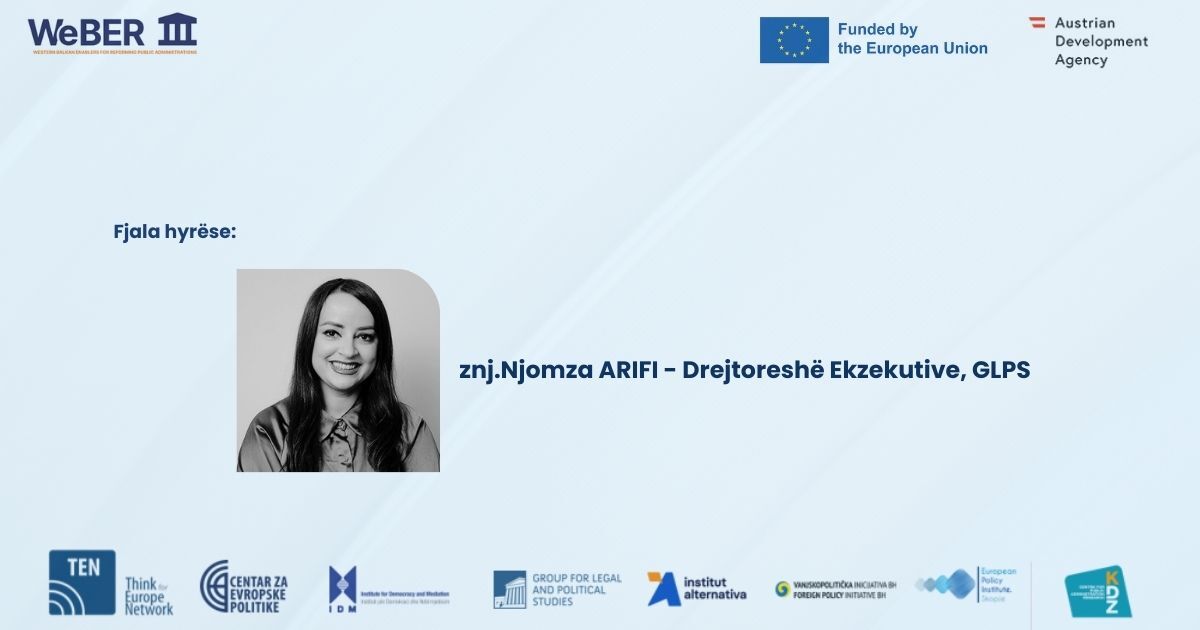
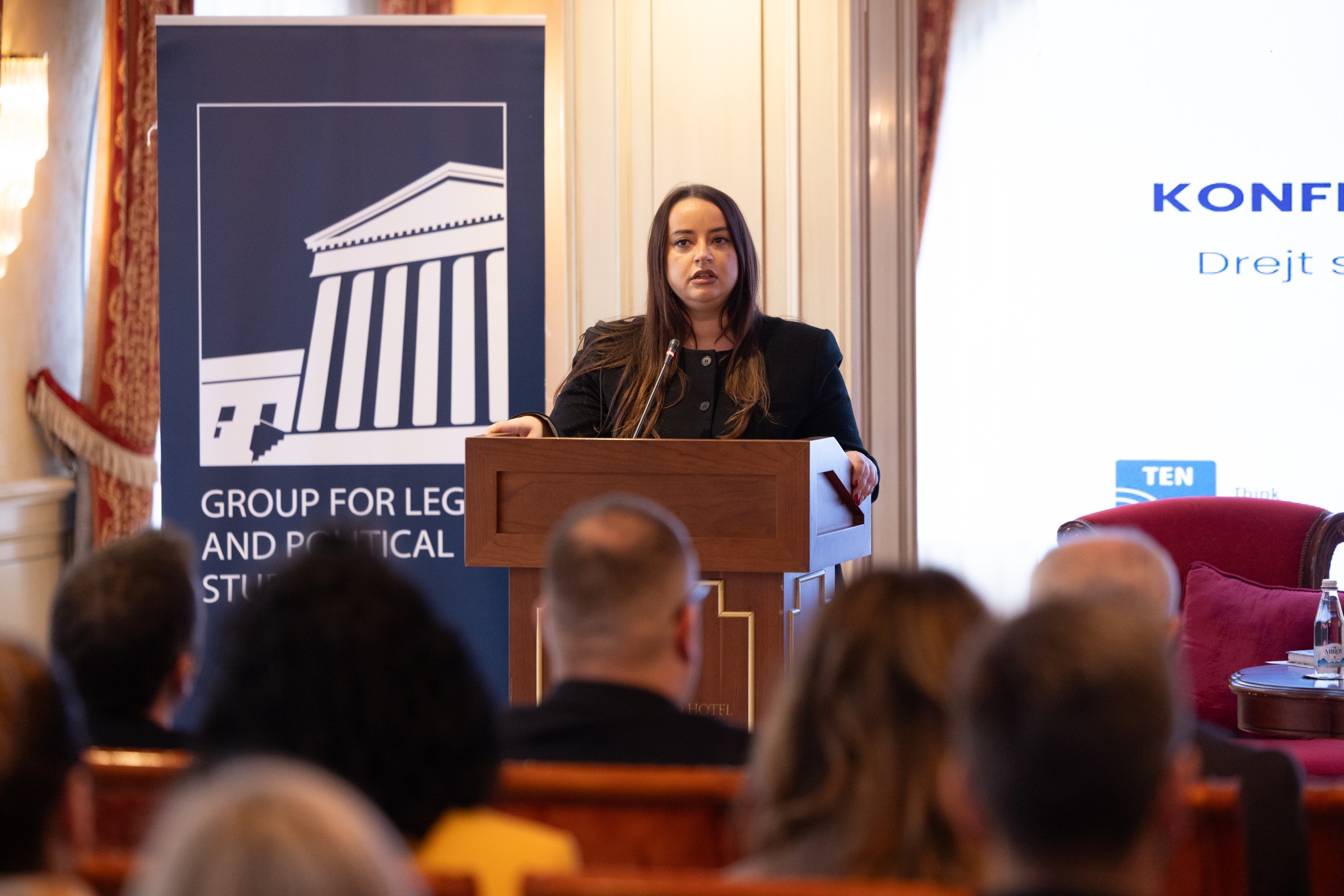
Opening the conference, Njomza Arifi, Executive Director of GLPS, underlined that public administration reform directly affects citizens’ quality of life. She stressed the importance of stronger institutional cooperation, inclusive dialogue and meaningful engagement between institutions and civil society in advancing citizen-oriented reforms.
Digitalisation and Reducing Administrative Burdens
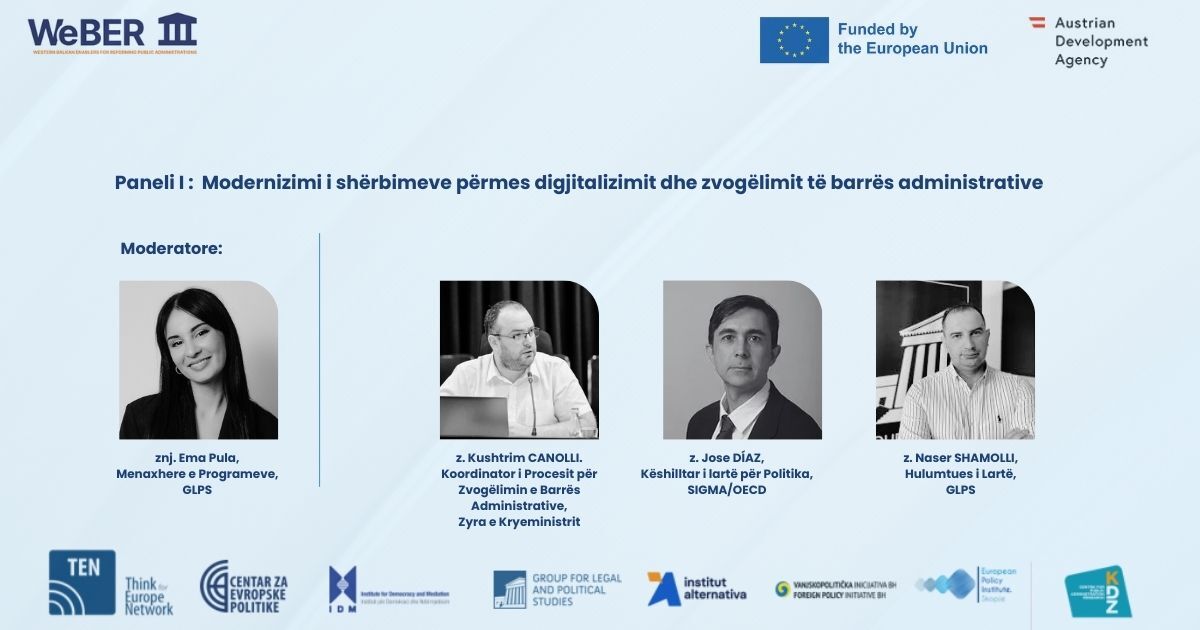
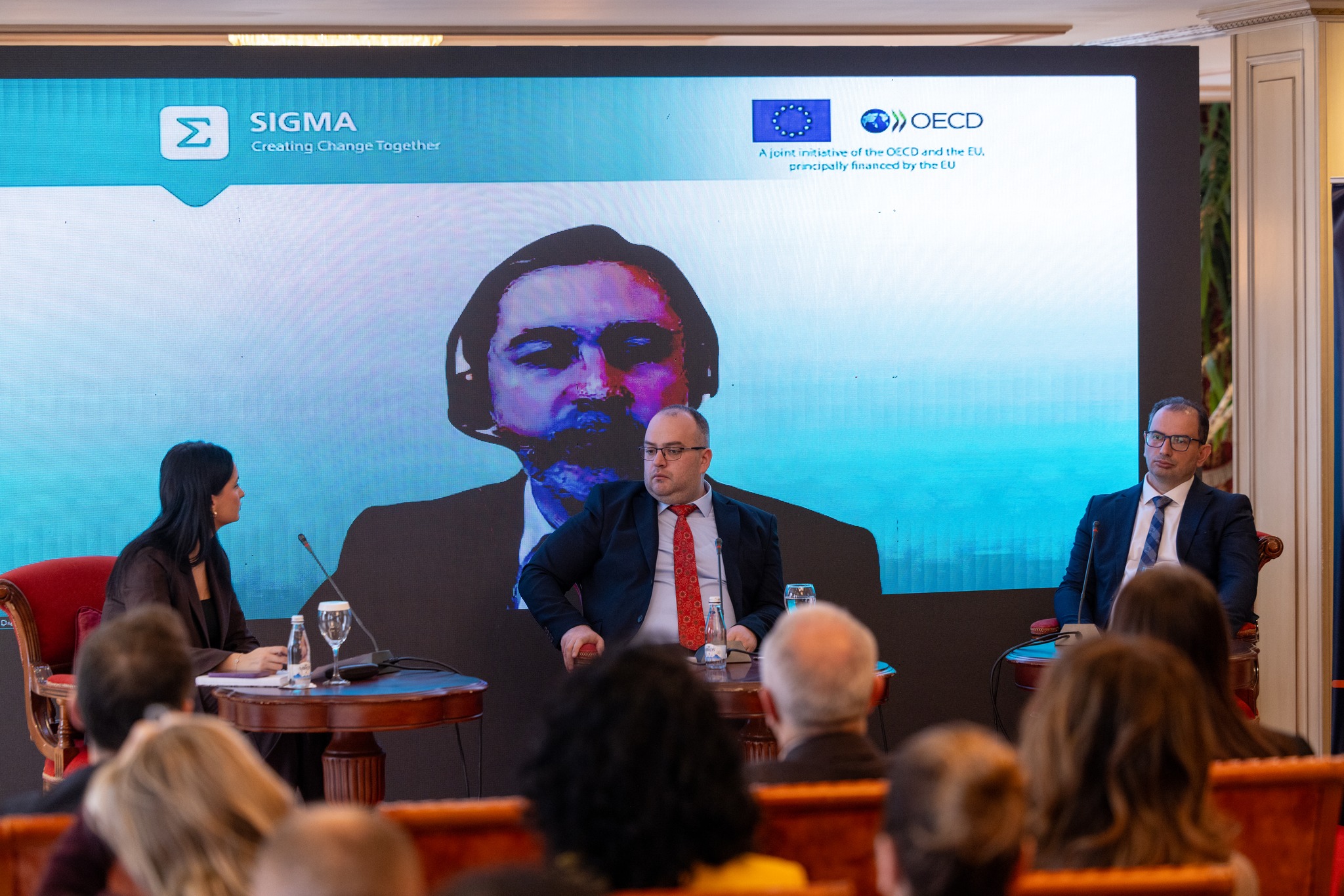
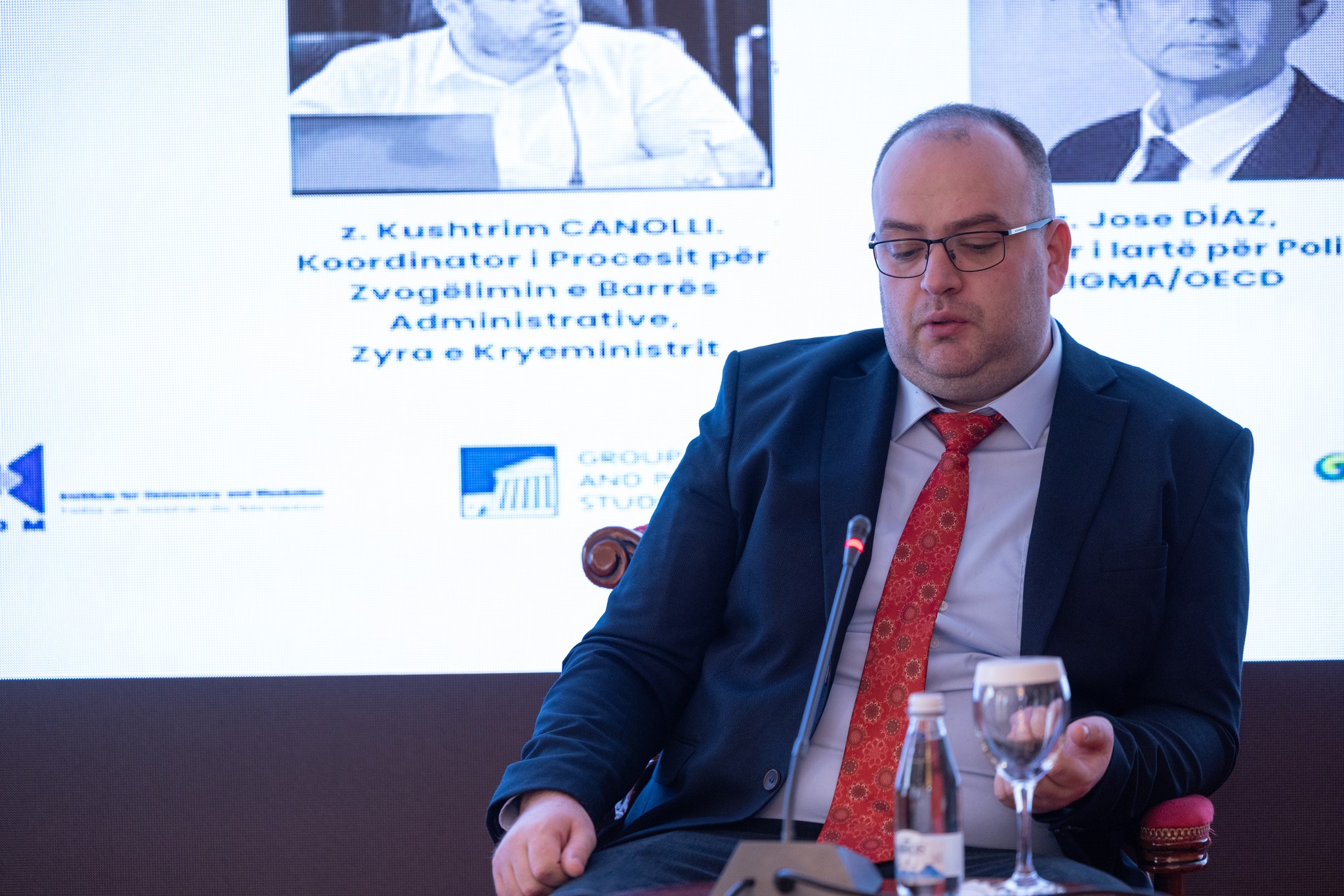
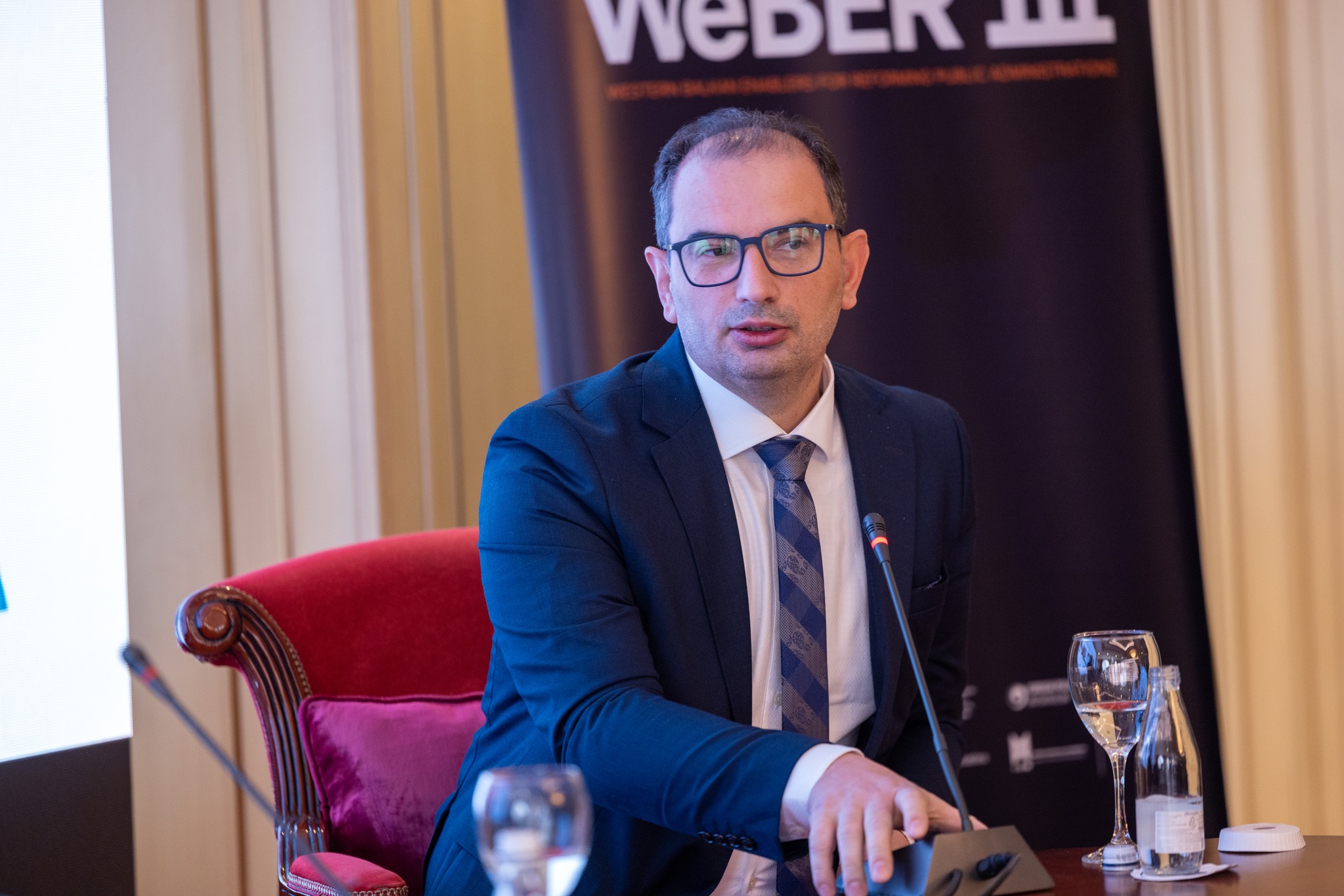
The first panel focused on modernising public services through digitalisation and reducing administrative burden, bringing together representatives from government, SIGMA/OECD and civil society.
Kushtrim Canolli, from the Office of the Prime Minister, presented progress achieved in reducing administrative burdens through digitalisation, highlighting the importance of cooperation between institutions, civil society and the private sector.
Jose Diaz, SIGMA/OECD expert, noted that Kosovo has made notable progress in modernising public services. He highlighted key developments, including the consolidation of services within the national e-Kosova portal, expanded interoperability across central and local institutions, the application of the “once-only” principle through electronic identification, and the use of artificial intelligence to identify administrative burdens and improve service delivery. Referring to SIGMA’s assessment methodology, he emphasised that Kosovo shows substantial progress across a wide range of indicators.
Naser Shamolli, Senior Researcher at GLPS, emphasised that while digitalisation is an important tool, the core challenge lies in the complexity of the existing legal framework. He pointed out that administrative burdens are often embedded in legislation itself, through numerous laws and by-laws that impose extensive requirements on citizens. According to Shamolli, simplifying the legal framework is essential for digitalisation efforts to have a real and lasting impact on citizens.
What Citizens Say About Public Services
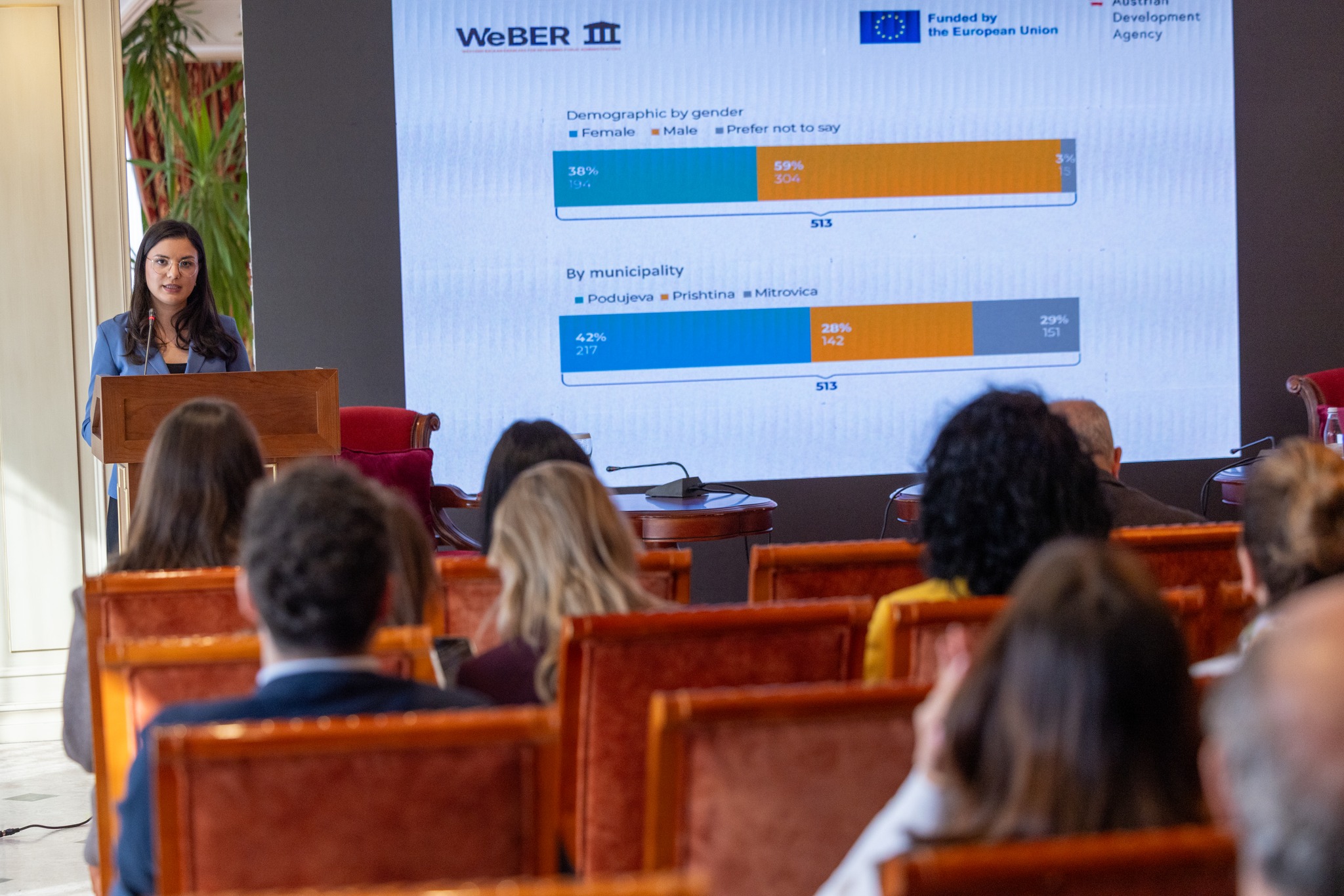
The second session presented citizen perceptions of public service delivery, based on surveys conducted in Podujeva, Pristina and Mitrovica.
Elona Kurti, Project Coordinator at GLPS, presented the findings, which showed generally high levels of citizen satisfaction with service speed, work organisation and staff behaviour across all three municipalities. Citizens also reported noticeable improvements over time, particularly in service speed and the simplification of procedures, while challenges remain in areas such as service accessibility and wayfinding.
Local-Level Reform Through Participation
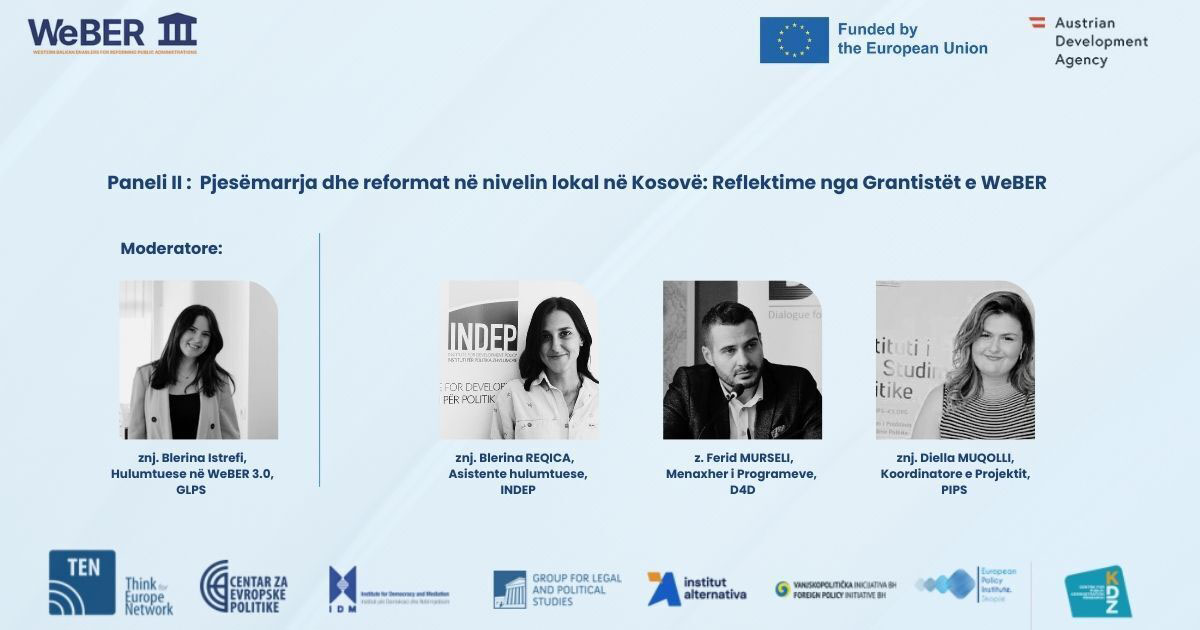
The final panel focused on local-level participation and reform, featuring experiences from WeBER grantees.
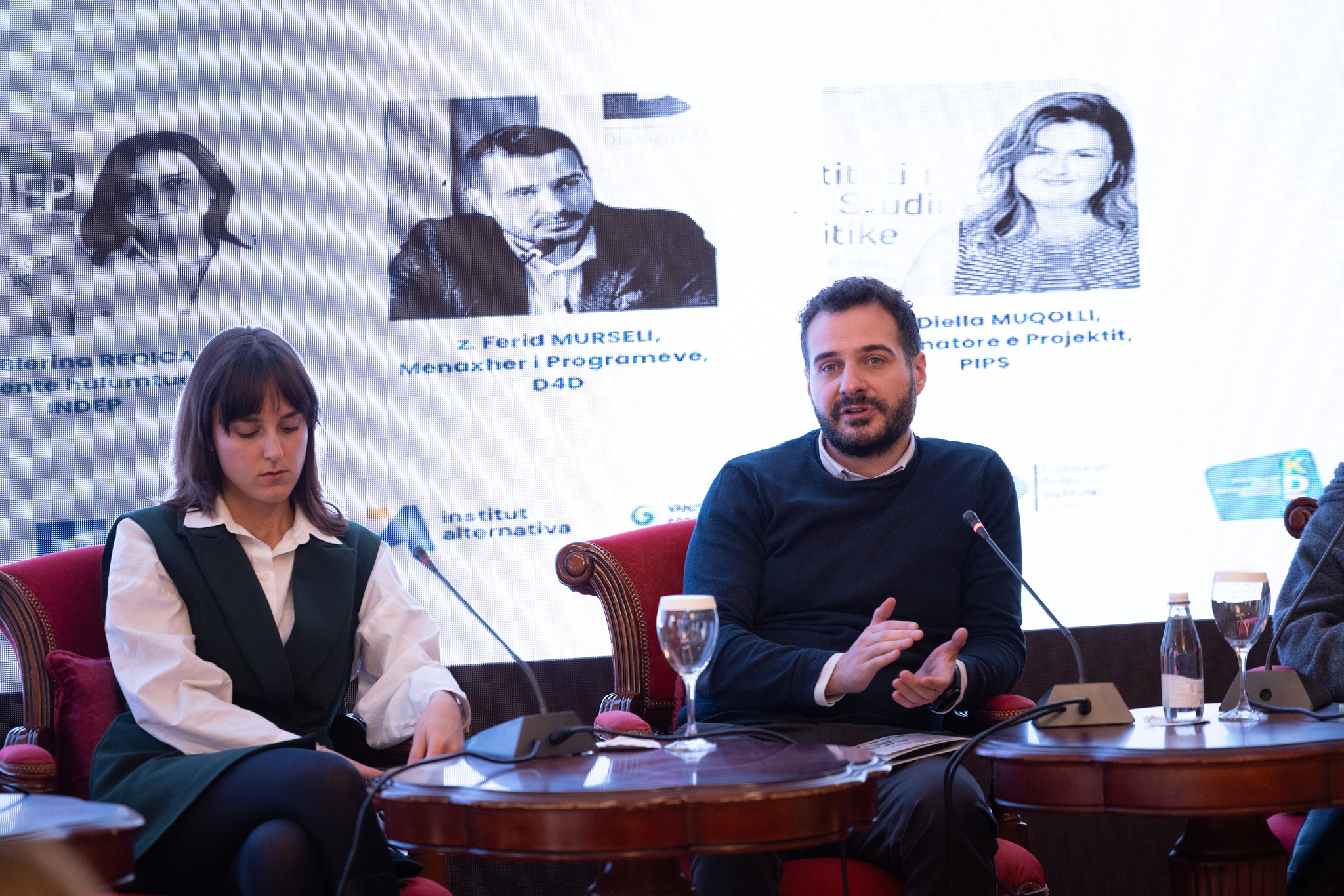
Representatives from INDEP, Democracy for Development (D4D) and PIPS shared experiences from projects implemented in Mitrovica, Podujeva and Suhareka. Speakers highlighted strong cooperation with local institutions, the value of participatory and design-thinking approaches, and the importance of engaging citizens early in the reform process. The projects demonstrated how citizen involvement and digital tools can lead to practical improvements in local public services.
Key Messages
Discussions throughout the conference reaffirmed that digitalisation, simplified procedures and meaningful citizen participation are essential for improving public service delivery in Kosovo. Participants agreed that sustainable reform requires close cooperation between institutions and civil society, continuous feedback from citizens, and a strong focus on reducing administrative burdens in both practice and legislation.






National Conference “Citizens First” Held in Pristina
Pristina, 3 December 2025
The National Conference “Towards Citizen-Oriented Public Services in Kosovo”, organised by the Group for Legal and Political Studies (GLPS), brought together representatives of public institutions, experts and civil society organisations to discuss progress, challenges and future steps in improving public service delivery in Kosovo.
The conference was organised within the framework of the WeBER 3.0 project, and focused on strengthening transparency, efficiency and citizen engagement in public administration reform, with a particular emphasis on digitalisation and reducing administrative burdens.
Public Administration Reform as a Quality-of-Life Issue
Opening the conference, Njomza Arifi, Executive Director of GLPS, underlined that public administration reform directly affects citizens’ quality of life. She stressed the importance of stronger institutional cooperation, inclusive dialogue and meaningful engagement between institutions and civil society in advancing citizen-oriented reforms.
Digitalisation and Reducing Administrative Burdens
The first panel focused on modernising public services through digitalisation and reducing administrative burden, bringing together representatives from government, SIGMA/OECD and civil society.
Kushtrim Canolli, from the Office of the Prime Minister, presented progress achieved in reducing administrative burdens through digitalisation, highlighting the importance of cooperation between institutions, civil society and the private sector.
Jose Diaz, SIGMA/OECD expert, noted that Kosovo has made notable progress in modernising public services. He highlighted key developments, including the consolidation of services within the national e-Kosova portal, expanded interoperability across central and local institutions, the application of the “once-only” principle through electronic identification, and the use of artificial intelligence to identify administrative burdens and improve service delivery. Referring to SIGMA’s assessment methodology, he emphasised that Kosovo shows substantial progress across a wide range of indicators.
Naser Shamolli, Senior Researcher at GLPS, emphasised that while digitalisation is an important tool, the core challenge lies in the complexity of the existing legal framework. He pointed out that administrative burdens are often embedded in legislation itself, through numerous laws and by-laws that impose extensive requirements on citizens. According to Shamolli, simplifying the legal framework is essential for digitalisation efforts to have a real and lasting impact on citizens.
What Citizens Say About Public Services
The second session presented citizen perceptions of public service delivery, based on surveys conducted in Podujeva, Pristina and Mitrovica.
Elona Kurti, Project Coordinator at GLPS, presented the findings, which showed generally high levels of citizen satisfaction with service speed, work organisation and staff behaviour across all three municipalities. Citizens also reported noticeable improvements over time, particularly in service speed and the simplification of procedures, while challenges remain in areas such as service accessibility and wayfinding.
Local-Level Reform Through Participation
The final panel focused on local-level participation and reform, featuring experiences from WeBER grantees.
Representatives from INDEP, Democracy for Development (D4D) and PIPS shared experiences from projects implemented in Mitrovica, Podujeva and Suhareka. Speakers highlighted strong cooperation with local institutions, the value of participatory and design-thinking approaches, and the importance of engaging citizens early in the reform process. The projects demonstrated how citizen involvement and digital tools can lead to practical improvements in local public services.
Key Messages
Discussions throughout the conference reaffirmed that digitalisation, simplified procedures and meaningful citizen participation are essential for improving public service delivery in Kosovo. Participants agreed that sustainable reform requires close cooperation between institutions and civil society, continuous feedback from citizens, and a strong focus on reducing administrative burdens in both practice and legislation.