
National Conference “Citizens First” Held in Skopje
Skopje, 17 December 2025
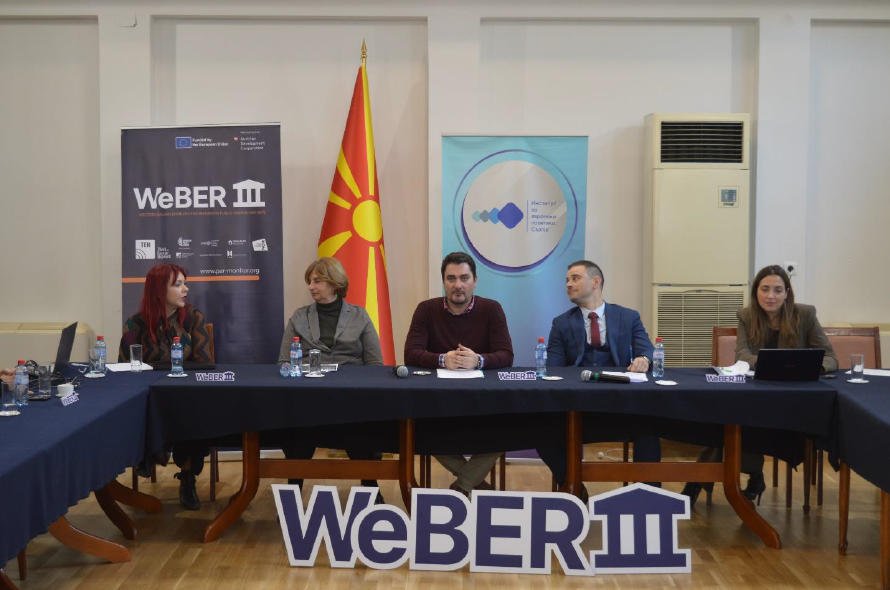
The National Conference “Citizens First”, organised by the European Policy Institute (EPI), brought together representatives of institutions, local self-government, civil society and donors to discuss how to make public services more efficient, transparent and truly citizen-oriented.
The conference was organised within the WeBER 3.0 project, funded by the European Union and co-funded by the Austrian Development Agency. It showcased concrete results of projects supported through the WeBER small grants scheme, highlighting innovative solutions in the areas of digitalisation, transparency and public service delivery, while also encouraging the exchange of experiences from across the Western Balkans.
Putting Citizens at the Centre of Reform
Opening the conference, Simonida Kacarska, Director of EPI, underlined that “Citizens First” is not just a project, but part of EPI’s long-term work on public administration reform. She emphasised that the three-year WeBER 3.0 project aims to strengthen capacities for improving public administration at both national and local levels, in close cooperation with key institutions. Kacarska highlighted the support of the EU Delegation and cooperation with the Ministry of Digital Transformation, as well as the important contribution of civil society organisations whose project results were presented at the event.
Ben Nupnau, Deputy Head of the EU Delegation to North Macedonia, stressed that public administration reform and digitalisation are among the key pillars of the EU integration process. While acknowledging progress, he noted that further efforts are needed, particularly in strengthening digital service delivery. He emphasised that digitalisation and public administration reform are essential tools for increasing efficiency, simplifying procedures and strengthening the fight against corruption — all with direct benefits for citizens.
Digitalisation as a Political Priority
The Minister of Digital Transformation, Stefan Andonovski, highlighted that digitalisation is a political priority, not merely a technical process. He stressed that interoperability between institutions is crucial for delivering faster and higher-quality services, and that administrative burdens should not fall on citizens. According to the Minister, clear, standardised and automated procedures reduce opportunities for corruption and make services more accessible. He also presented recent progress in expanding interoperability and announced further steps, including upgrades to document management systems and plans for introducing an electronic archive.
Citizen-Oriented Public Services: Challenges and Good Practices
The first panel focused on national and regional experiences in citizen-oriented public service design, addressing challenges such as coordination between institutions, legal barriers, accessibility and digital literacy. Speakers emphasised the importance of the “once-only” principle, inclusive services for all citizens, and the need for well-designed, standardised and user-friendly digital services.
Regional experiences highlighted the value of political commitment, strong institutional responsibility and thorough analysis before digital solutions are developed. Interoperability, mobile-friendly services and trust in data protection were identified as key elements of successful digital public services.
What Do Citizens Say?
A dedicated session presented findings from exit polls conducted in Kochani, Bitola and Ohrid, involving around 600 citizens. The results showed that citizens still face challenges related to slow procedures, limited digital accessibility and insufficient opportunities to provide feedback. The findings clearly point to the need for continued digitalisation, simplified procedures and stronger mechanisms for citizen participation in improving public services.
Local Solutions Through Participation
The second panel showcased participatory, local-level solutions implemented by WeBER grantees:
- In Ohrid, the Consumers’ Organization of Macedonia worked on improving digital communal services, introducing clearer instructions and an online complaint form, alongside a wide public information campaign.
- In Bitola, the “Bitola 2.0” project brought the municipality closer to citizens through digital tools, including the launch of the city’s first Digital Cultural Calendar.
- In Kochani, the “MCommunity” project strengthened digital communication between the municipality and citizens, engaging over 1,200 people in digital consultations and improving administrative capacities.
Discussions highlighted the importance of sustainability, continuous use of digital tools and ongoing training for municipal staff, as well as the openness of municipalities to cooperate with civil society.
Key Takeaways
The conference concluded with a clear message: citizen feedback is not criticism, but a roadmap for better governance. Participants agreed that citizens must be involved throughout the entire service lifecycle — from design to evaluation — and that services should be simple, accessible, reliable and increasingly available online. Strengthening interoperability, standardising procedures, improving communication and investing in human capacities were identified as essential steps toward building public services that truly work for citizens.
National Conference “Citizens First” Held in Skopje
Skopje, 17 December 2025
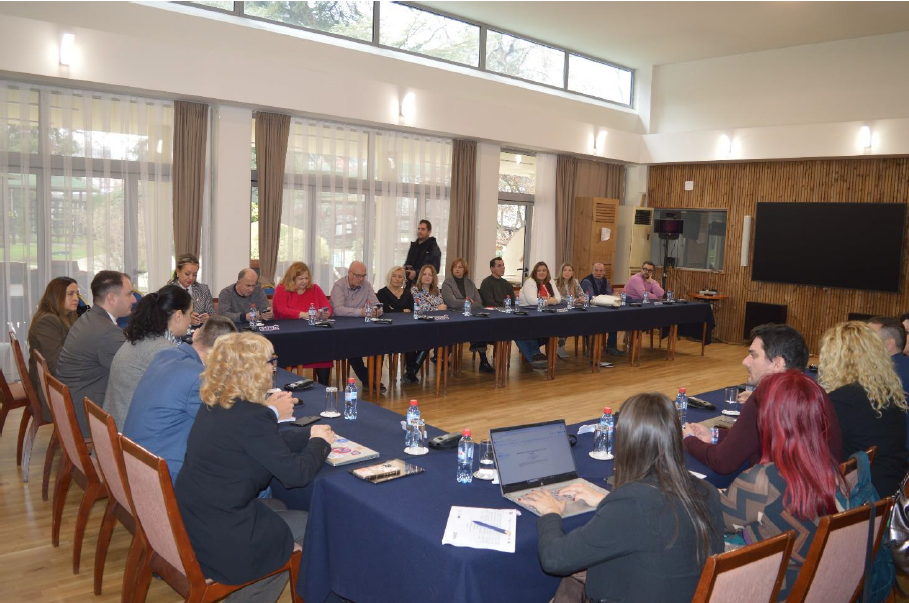
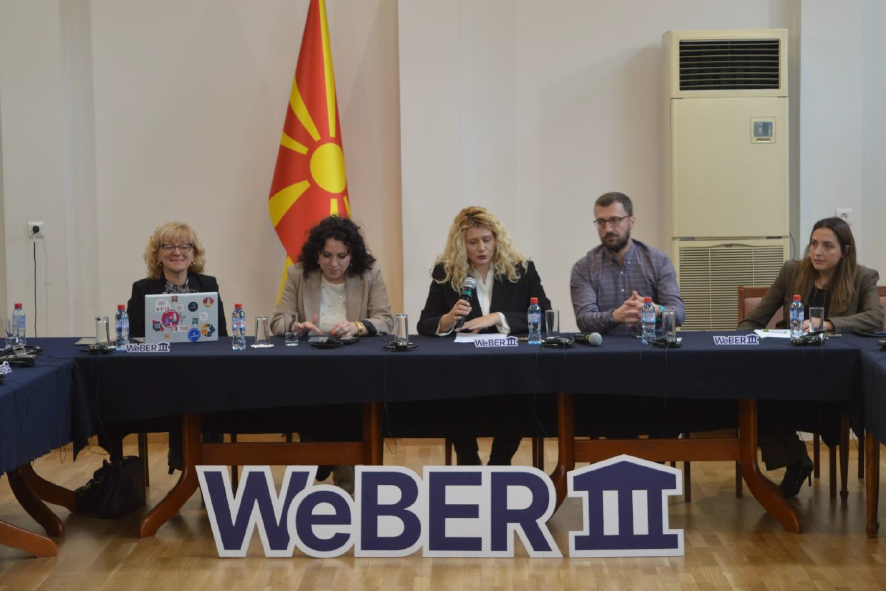
The National Conference “Citizens First”, organised by the European Policy Institute (EPI), brought together representatives of institutions, local self-government, civil society and donors to discuss how to make public services more efficient, transparent and truly citizen-oriented.
The conference was organised within the WeBER 3.0 project, funded by the European Union and co-funded by the Austrian Development Agency. It showcased concrete results of projects supported through the WeBER small grants scheme, highlighting innovative solutions in the areas of digitalisation, transparency and public service delivery, while also encouraging the exchange of experiences from across the Western Balkans.
Putting Citizens at the Centre of Reform
Opening the conference, Simonida Kacarska, Director of EPI, underlined that “Citizens First” is not just a project, but part of EPI’s long-term work on public administration reform. She emphasised that the three-year WeBER 3.0 project aims to strengthen capacities for improving public administration at both national and local levels, in close cooperation with key institutions. Kacarska highlighted the support of the EU Delegation and cooperation with the Ministry of Digital Transformation, as well as the important contribution of civil society organisations whose project results were presented at the event.
Ben Nupnau, Deputy Head of the EU Delegation to North Macedonia, stressed that public administration reform and digitalisation are among the key pillars of the EU integration process. While acknowledging progress, he noted that further efforts are needed, particularly in strengthening digital service delivery. He emphasised that digitalisation and public administration reform are essential tools for increasing efficiency, simplifying procedures and strengthening the fight against corruption — all with direct benefits for citizens.
Digitalisation as a Political Priority
The Minister of Digital Transformation, Stefan Andonovski, highlighted that digitalisation is a political priority, not merely a technical process. He stressed that interoperability between institutions is crucial for delivering faster and higher-quality services, and that administrative burdens should not fall on citizens. According to the Minister, clear, standardised and automated procedures reduce opportunities for corruption and make services more accessible. He also presented recent progress in expanding interoperability and announced further steps, including upgrades to document management systems and plans for introducing an electronic archive.
Citizen-Oriented Public Services: Challenges and Good Practices
The first panel focused on national and regional experiences in citizen-oriented public service design, addressing challenges such as coordination between institutions, legal barriers, accessibility and digital literacy. Speakers emphasised the importance of the “once-only” principle, inclusive services for all citizens, and the need for well-designed, standardised and user-friendly digital services.
Regional experiences highlighted the value of political commitment, strong institutional responsibility and thorough analysis before digital solutions are developed. Interoperability, mobile-friendly services and trust in data protection were identified as key elements of successful digital public services.
What Do Citizens Say?
A dedicated session presented findings from exit polls conducted in Kochani, Bitola and Ohrid, involving around 600 citizens. The results showed that citizens still face challenges related to slow procedures, limited digital accessibility and insufficient opportunities to provide feedback. The findings clearly point to the need for continued digitalisation, simplified procedures and stronger mechanisms for citizen participation in improving public services.
Local Solutions Through Participation
The second panel showcased participatory, local-level solutions implemented by WeBER grantees:
- In Ohrid, the Consumers’ Organization of Macedonia worked on improving digital communal services, introducing clearer instructions and an online complaint form, alongside a wide public information campaign.
- In Bitola, the “Bitola 2.0” project brought the municipality closer to citizens through digital tools, including the launch of the city’s first Digital Cultural Calendar.
- In Kochani, the “MCommunity” project strengthened digital communication between the municipality and citizens, engaging over 1,200 people in digital consultations and improving administrative capacities.
Discussions highlighted the importance of sustainability, continuous use of digital tools and ongoing training for municipal staff, as well as the openness of municipalities to cooperate with civil society.
Key Takeaways
The conference concluded with a clear message: citizen feedback is not criticism, but a roadmap for better governance. Participants agreed that citizens must be involved throughout the entire service lifecycle — from design to evaluation — and that services should be simple, accessible, reliable and increasingly available online. Strengthening interoperability, standardising procedures, improving communication and investing in human capacities were identified as essential steps toward building public services that truly work for citizens.